The Shift Toward Smarter Fleets
Fleet management has entered a transformative era where artificial intelligence (AI) is redefining how vehicles are monitored, maintained, and managed. The growing demand for safety, cost-efficiency, and sustainability has pushed companies to adopt smarter, data-driven systems that can process information faster than any human team could.
From telematics and driver behavior analytics to predictive maintenance and AI automation, AI is no longer a futuristic concept; it is an operational necessity. As the trucking and logistics sectors evolve, fleet owners leveraging AI-powered tools are seeing reduced downtime, optimized routes, better compliance with FMCSA standards, and higher profitability.
At SafeRoad Compliance, we explore how AI is shaping the future of fleet management and why it’s time for fleets to transition from traditional methods to next-generation technology platforms like our Fleet Management Portal.
AI in Fleet Management: More Than Just Automation
AI is revolutionizing the fleet industry by turning massive data sets into actionable insights. Traditional fleet management relied heavily on manual reporting and basic telematics. Today, AI enables fleets to analyze patterns, predict issues, and make real-time operational decisions.
Key AI-driven functionalities include:
- Predictive Analytics: Anticipating vehicle breakdowns or maintenance needs.
- Route Optimization: Considering live traffic, driver fatigue, and weather data.
- Driver Performance Monitoring: Evaluating and coaching based on behavior analytics.
- Automated Reporting: Generating DOT compliance and HOS logs with minimal effort.
AI systems continuously learn from each trip, improving their accuracy and efficiency over time. Fleet managers gain more control, fewer errors, and enhanced compliance visibility, aligning perfectly with FMCSA safety objectives outlined in Understanding the Role of FMCSA in DOT Compliance.
Predictive Maintenance: Preventing Downtime Before It Happens
One of the biggest advantages of AI in fleet management is predictive maintenance. Rather than waiting for a breakdown or relying on manual inspections, AI uses data from sensors, telematics, and historical performance to predict when a component will fail.
For instance, by analyzing metrics like engine temperature, fuel consumption, vibration patterns, and oil quality, AI algorithms can forecast mechanical issues weeks before they occur. This allows fleets to schedule maintenance at optimal times, minimizing costly breakdowns and unexpected downtime.
Predictive maintenance also improves DOT vehicle inspection compliance, helping fleets stay ready for Pre-Trip Inspection Requirements and Post-Trip Inspection Requirements without operational disruptions.
Data-Driven Decision Making for Fleet Optimization
AI integrates with telematics systems to capture real-time data from vehicles and drivers. This data helps managers make informed decisions that improve safety, efficiency, and cost control.
Examples of AI-powered insights include:
- Fuel Optimization: Detecting fuel waste due to idling, poor routing, or driver behavior.
- Driver Coaching: Identifying unsafe driving patterns like harsh braking or speeding.
- Route Planning: Using AI models to analyze past traffic trends and plan optimal delivery schedules.
- Asset Utilization: Tracking underused vehicles and reallocating resources efficiently.
Such insights enable fleets to reduce operational costs and improve service delivery while remaining compliant with FMCSA’s Hours of Service (HOS) and ELD Guide.
Enhancing Safety Through AI Monitoring
AI-powered dash cams, fatigue monitoring systems, and behavior analytics have become essential tools for modern fleet safety. These systems use computer vision and machine learning to detect risky behaviors such as distracted driving, tailgating, or drowsiness in real time.
When an unsafe action is detected, the AI system alerts the driver instantly and notifies the fleet manager. Over time, these systems create a performance history that helps managers provide targeted coaching and reward safe driving habits.
Fleet-wide adoption of AI safety systems directly contributes to better CSA Scores, which we explain in our detailed guide on CSA Scores Explained. A lower score not only reduces accident risks but also enhances a fleet’s reputation with insurers and regulators.
AI and Compliance: Automating the Paper Trail
Staying compliant with FMCSA and DOT regulations is one of the toughest challenges for fleet operators. Manual recordkeeping often leads to errors and missed deadlines, exposing companies to fines and audits.
AI-driven fleet management software automates this process by:
- Tracking driver hours and logs automatically.
- Storing digital copies of vehicle inspection and maintenance records.
- Issuing alerts for expiring driver qualifications, permits, or medical certificates.
- Generating audit-ready compliance reports.
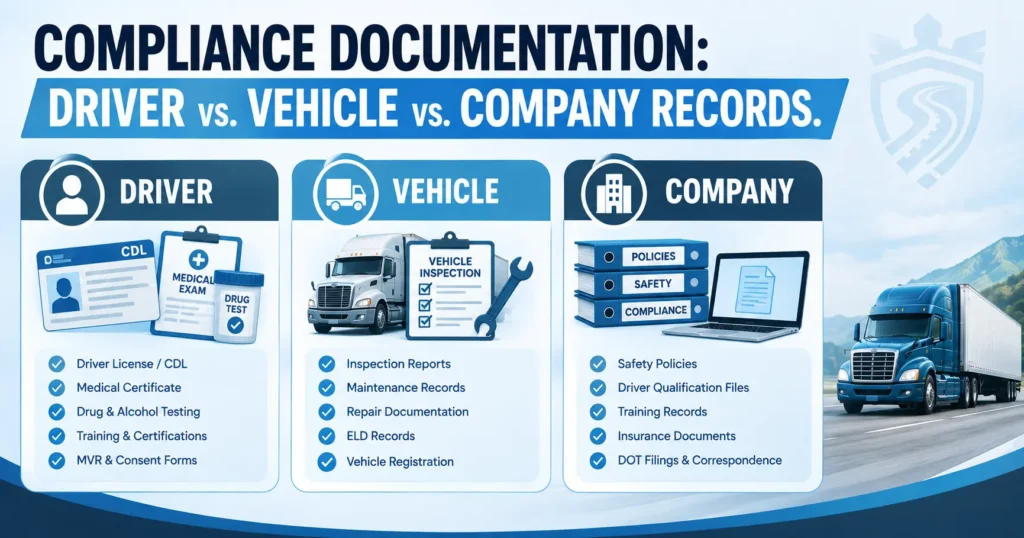
By centralizing compliance records, AI tools ensure that fleets are always prepared for DOT audits. For guidance on maintaining compliance records, explore DOT Recordkeeping Requirements for Trucking Companies.
The Role of AI in Sustainable Fleet Operations
Sustainability is becoming a major driver of innovation in fleet management. AI helps companies reduce their environmental footprint through smarter operations.
AI enables:
- Eco-Driving Programs: Monitoring driver behavior to reduce fuel waste.
- EV Integration: Managing electric vehicle (EV) charging schedules and battery health.
- Carbon Tracking: Analyzing fleet emissions and identifying greener alternatives.
As environmental regulations tighten, AI-driven sustainability tracking will become a core part of fleet compliance strategy, complementing initiatives under FMCSA and EPA guidelines.
Autonomous Fleet Technology: The Next Frontier
Autonomous and semi-autonomous fleet technology is rapidly moving from research to reality. These systems combine AI, LiDAR, GPS, and advanced telematics to assist or replace human driving under certain conditions.
In the coming years, we can expect:
- AI-assisted lane changing, braking, and adaptive cruise control.
- Self-learning navigation for long-haul freight optimization.
- Reduced accidents through automated hazard detection.
While regulatory frameworks are still evolving, autonomous technologies are expected to transform logistics by reducing human error, lowering fuel consumption, and improving on-time delivery rates. These developments align with FMCSA’s long-term goal of safer roads and automated compliance oversight.
Connected Fleet Ecosystems: AI, IoT, and Cloud Integration
The future of fleet management lies in connected ecosystems where vehicles, drivers, and managers share real-time data across secure cloud networks.
AI-powered platforms leverage the Internet of Things (IoT) to integrate data from onboard sensors, GPS, and external sources like weather systems and traffic databases. The result is a dynamic, always-connected fleet that reacts instantly to changing conditions.
Cloud-based fleet management systems also improve scalability, making it easier for companies to manage multi-location fleets while maintaining centralized control. For more insights on this technology shift, read our article on Fleet Compliance Software.
AI-Powered Fleet Management Platforms: The New Standard
The next generation of fleet management platforms, such as the SafeRoad Compliance Fleet Portal, are designed around AI and automation. These systems unify all fleet operations into a single, intuitive interface, covering compliance, tracking, safety, and analytics.
Key advantages include:
- Real-time fleet visibility and driver monitoring.
- Automated compliance and documentation tracking.
- Predictive analytics for maintenance and fuel management.
- Integration with DOT and FMCSA compliance modules.
These platforms are scalable and ideal for fleets of all sizes, ensuring data-driven performance while maintaining safety and regulatory alignment.
Challenges and Ethical Considerations in AI Adoption
Despite its promise, integrating AI into fleet management comes with challenges. Data privacy, algorithmic transparency, and initial implementation costs can raise concerns among smaller operators.
Ethical AI deployment requires clear policies on data usage and monitoring. Fleets must ensure AI tools are used to enhance safety and productivity, not as intrusive surveillance systems.
Moreover, training and upskilling staff to interpret AI-driven insights is critical. Human oversight remains essential for ethical, accurate decision-making in automated environments.
Key Takeaways
- The future of fleet management is powered by AI, automation, and connected data.
- Predictive analytics and machine learning reduce downtime and improve safety.
- AI ensures compliance through automated tracking and reporting.
- Sustainable and autonomous technologies are reshaping fleet operations.
- Platforms like SafeRoad’s Fleet Management Portal offer end-to-end digital control for modern fleets.
Ready to Future-Proof Your Fleet?
At SafeRoad Compliance, we help carriers and trucking companies simplify operations with advanced compliance support and smart fleet management solutions designed for the future.
- Virtual Fleet Management Support
- DOT & FMCSA Compliance Assistance
- Driver & Vehicle Monitoring Solutions
- Automated Recordkeeping & Reporting
- Scalable Tools for Growing Fleets
Schedule an Appointment Today
Book your 30-minute compliance consultation with our DOT experts.
Frequently Asked Questions (FAQs)
AI analyzes data from vehicles and drivers to optimize routes, predict maintenance, improve safety, and automate compliance reporting.
Predictive maintenance uses AI and sensor data to identify potential vehicle failures before they occur, preventing costly breakdowns.
Yes. AI-powered cameras and driver monitoring systems detect unsafe behaviors and alert drivers instantly, reducing accident risks.
AI automates DOT and FMCSA compliance documentation, monitors driver hours, and keeps records audit-ready.
Absolutely. Cloud-based platforms make AI technology accessible and affordable for fleets of all sizes.