Disclosure: Informational only. We are not FMCSA or USDOT. Always verify your status directly through official FMCSA systems.
Starting a trucking company is exciting, but the first 90 days after getting your authority are also the most critical. This period determines whether your business launches smoothly or runs into compliance issues that can delay operations, trigger fines, or even result in revocation of authority.
This new authority checklist breaks down exactly what to do during your first 90 days of trucking, using a simple, plain-English timeline. It also explains how to prepare for the FMCSA New Entrant Safety Audit, which every new interstate carrier must pass.
Why the First 90 Days Matter for New Carriers
When FMCSA grants your authority, your company enters the New Entrant Safety Assurance Program. During this phase, FMCSA closely monitors your compliance with federal safety regulations.
Mistakes commonly made by new carriers include:
- Missing or incomplete Driver Qualification Files
- Improper drug & alcohol compliance
- Poor Hours-of-Service records
- Lack of documentation, even when policies exist
FMCSA doesn’t just care that you are compliant, it cares whether you can prove it with documentation.
That’s why following a structured new authority checklist is essential.
Your First 90 Days Trucking Timeline (Plain English)
Week 1–2: Authority Activation & Setup
This phase focuses on making your authority legally usable.
Insurance on file and authority active
- Your insurance must be filed electronically with FMCSA
- Authority is not active until FMCSA shows “Granted” status
File your BOC-3
- The BOC-3 designates process agents in every state
- Required before authority becomes active
- Reference: FMCSA BOC-3 filing requirements
Register for UCR (if operating interstate)
- Unified Carrier Registration applies to most interstate carriers
- File at UCR.gov annually
Create your compliance document hub
Start organizing digital or physical folders for:
- FMCSA filings
- Insurance certificates
- Safety policies
- Driver records
- Vehicle records
FMCSA audits often fail carriers not due to violations, but because records are missing or scattered.
Week 3–4: Driver, Vehicle & Log Compliance
Now you shift from setup to operational compliance.
✔ Create complete Driver Qualification Files (DQFs)
Required under 49 CFR §391.51. Each DQF should include:
- Employment application
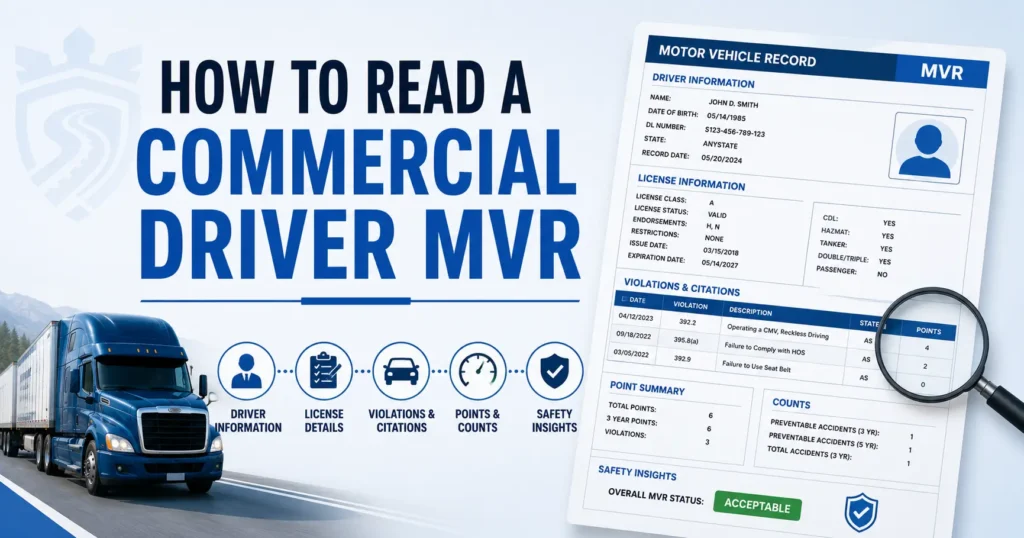
- Motor Vehicle Records (MVRs)
- Medical Examiner’s Certificate
- Road test or CDL copy
- Annual review documents
Incomplete DQFs are one of the top reasons carriers fail the New Entrant Safety Audit.
✔ Set up ELDs, logs, DVIRs & maintenance files
- Choose an FMCSA-approved ELD (if required)
- Train drivers on proper log usage
- Maintain:
- DVIRs
- Preventive maintenance records
- Repair documentation
✔ Register and learn FMCSA systems
- FMCSA Portal
- SAFER System
Understanding these tools helps you monitor: - Inspection history
- Authority status
- Public safety data
Month 2: Drug & Alcohol Compliance
This is a high-risk area for new carriers.
✔ Register in the FMCSA Clearinghouse
Required under 49 CFR §382.701.
You must:
- Register your company
- Purchase a query plan
- Run pre-employment queries before drivers perform safety-sensitive duties
- Conduct full queries with driver consent
✔ Join a random testing consortium (if applicable)
- Owner-operators and small fleets often overlook this
- Random testing applies even if you have one driver
Failure in this area can result in immediate audit failure.
Month 3: Audit Readiness & Mock Review
Now it’s time to think like an auditor.
✔ Conduct an internal mock audit
Use FMCSA’s official resources and checklists to review:
- Driver files
- Drug & alcohol records
- Hours-of-Service logs
- Vehicle maintenance files
✔ Fix gaps and document corrections
If you find issues:
- Correct them immediately
- Document the correction date and action taken
FMCSA expects to see evidence of corrective action, not perfection.
About the FMCSA New Entrant Safety Assurance Program
All new interstate carriers operate under New Entrant rules for approximately 18 months. During this time, FMCSA may conduct a New Entrant Safety Audit, either on-site or off-site.
To receive permanent registration, you must:
- Demonstrate compliance
- Provide organized documentation
- Pass the safety audit
Official overview: FMCSA New Entrant Program
What to Keep Ready for the New Entrant Safety Audit
Having these items organized can significantly reduce audit stress:
Driver & Employee Records
- Driver Qualification Files
- Drug & alcohol policy
- Clearinghouse queries and reports
Operations & Safety Records
- Hours-of-Service and ELD data
- Vehicle inspection, maintenance, and repair files
- Accident register and insurance documentation
FMCSA does not accept verbal explanations, documentation is everything.
Helpful Official FMCSA Resources
- FMCSA Forms Library & Planner
These tools help carriers understand what auditors expect and how to prepare properly.
Stay Organized During Your First 90 Days
Managing compliance while running a new trucking business is challenging. Missed deadlines, scattered records, or unclear processes can put your authority at risk.
SafeRoad organizes your first 90 days, runs compliance reminders, and stores audit-ready proof in one secure portal.
Schedule an Appointment Today
Book your 30-minute compliance consultation with our DOT experts.