Disclosure: Informational only. We are not FMCSA or USDOT. Always verify your status directly through official FMCSA systems.
Managing DOT compliance for a fleet is very different from running a single truck. With multiple drivers, vehicles, terminals, and deadlines, even small gaps can quickly turn into serious compliance risks.
This fleet compliance checklist is designed for multi-truck, multi-driver operations and explains what FMCSA expects in 2026, from Driver Qualification Files (DQFs) and Clearinghouse compliance to ELD audits, vehicle maintenance, and portal best practices for DOT audit prep.
Why Fleet DOT Compliance Requires a System (Not Just Checklists)
As fleets grow, compliance failures usually happen due to:
- Inconsistent recordkeeping across drivers
- Missed expirations (CDLs, medical cards, inspections)
- Lack of visibility for safety managers
- Poor documentation during DOT audits
FMCSA does not adjust expectations based on company size. In fact, larger fleets are often scrutinized more closely due to higher exposure and inspection volume.
That’s why successful fleets rely on a centralized trucking compliance portal, not spreadsheets or scattered folders.
Core DOT Compliance Files & Systems for Fleets
These are the non-negotiable foundations of fleet compliance.
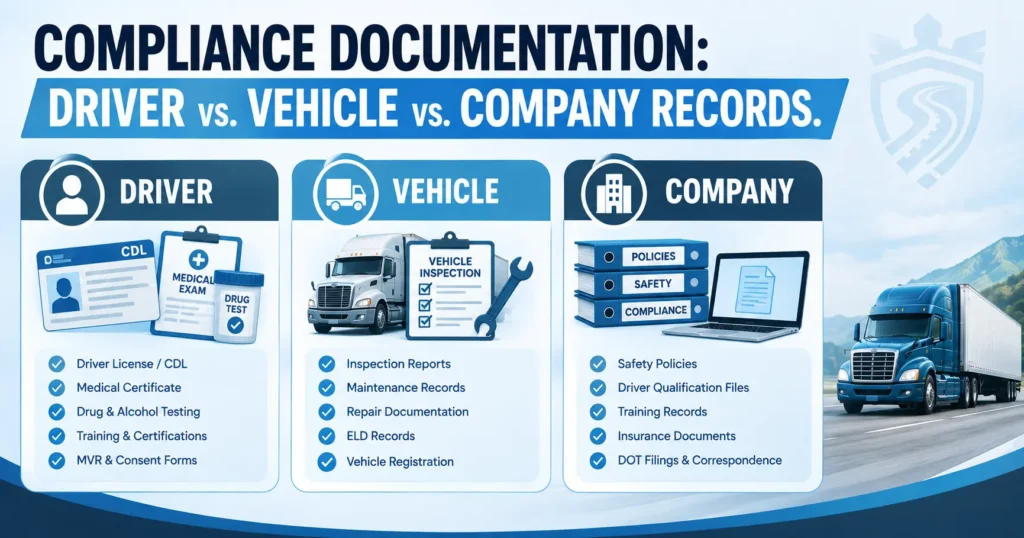
Driver Qualification Files (DQFs)
Required under 49 CFR §391.51 for every CDL driver.
Each DQF should include:
- Driver application and employment history
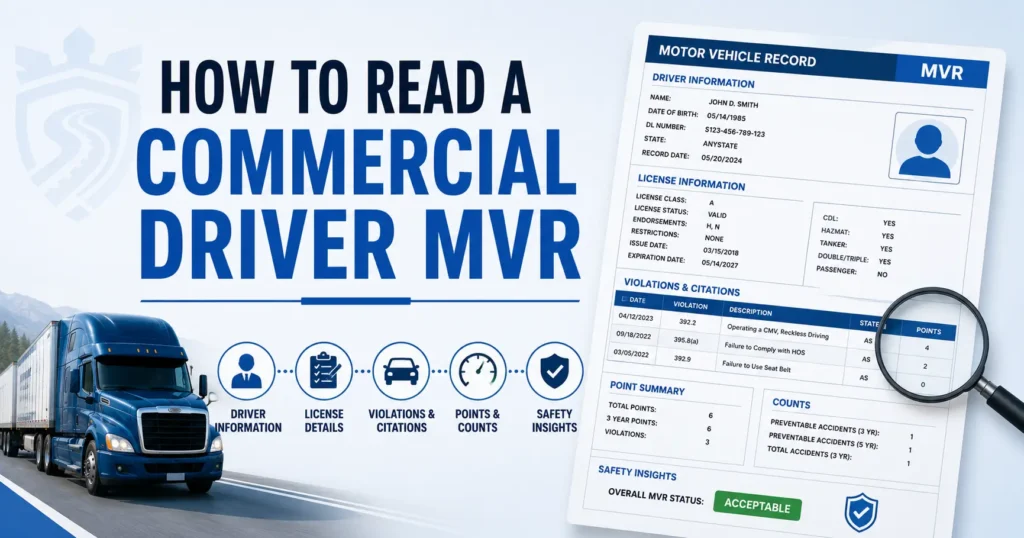
- Motor Vehicle Records (MVRs)
- Medical Examiner’s Certificate
- Road test or CDL copy
- Annual review documentation
Missing or incomplete DQFs are one of the top DOT audit violations for fleets.
FMCSA Clearinghouse Compliance
Under 49 CFR §382.701, fleets must:
- Register in the FMCSA Clearinghouse
- Purchase a query plan
- Run pre-employment full queries before drivers perform safety-sensitive duties
- Conduct annual limited queries for all active CDL drivers
Failure to manage Clearinghouse queries correctly can result in automatic audit failure.
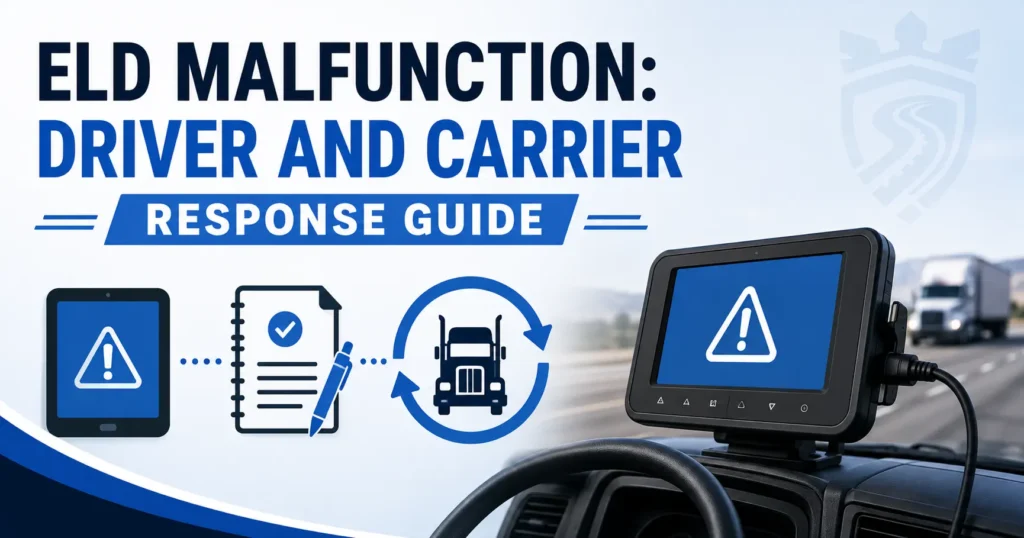
ELDs & Hours of Service (HOS)
Fleets must maintain:
- FMCSA-approved ELD systems
- Written HOS policies and driver acknowledgments
- Internal log review and audit procedures
- Supporting documents aligned with logs
DOT expects fleets to actively monitor and correct log violations, not just collect data.
Vehicle Files & Maintenance Records
Each vehicle should have:
- DVIRs
- Preventive maintenance schedules
- Repair and defect correction records
- Annual inspection documentation
DOT auditors will often sample vehicles across the fleet to verify consistency.
Accident Register & Insurance
Maintain:
- A DOT accident register
- Insurance certificates
- Accident documentation and corrective actions
These records demonstrate your fleet’s safety management controls.
Annual DOT Compliance Programs for Fleets
Annual programs show FMCSA that your company takes ongoing compliance seriously.
UCR Renewal
- Required annually at UCR.gov
- Applies to most interstate fleets
Driver & Safety Training Refreshers
Conduct and document training on:
- Hours of Service rules
- DVIR and vehicle inspections
- Drug & alcohol policies
- Company safety procedures
Training documentation is often requested during audits.
Mock DOT Audits
Use FMCSA’s official tools to conduct internal reviews:
- FMCSA Safety Planner
- FMCSA Forms & Checklists
Mock audits help identify issues before FMCSA does.
Trucking Compliance Portal Best Practices for Fleets
A modern trucking compliance portal is essential for multi-truck operations.
Role-Based Access
Assign permissions based on responsibility:
- Admins
- Safety managers
- Dispatchers
- HR or compliance staff
This reduces errors and improves accountability.
Version-Controlled Policy Documents
Ensure:
- Only the latest policies are accessible
- Old versions are archived, not deleted
- Driver acknowledgments are tracked
Auditors want to see current, enforced policies.
Expiration & Renewal Tracking
Automatically track:
- CDL expirations
- Medical cards
- Vehicle inspections
- Insurance renewals
Missed expirations are among the most preventable DOT violations.
Proof & Confirmation Uploads
Store confirmation PDFs for:
- MCS-150 updates
- UCR renewals
- BOC-3 filings
- Insurance filings
DOT audits often hinge on whether proof is immediately available.
Why DOT Audits Are Harder for Fleets
During a fleet DOT audit, FMCSA:
- Samples multiple drivers and vehicles
- Checks consistency across records
- Evaluates safety management processes, not just paperwork
A fleet that “mostly” complies is still considered non-compliant if systems are weak.
Centralize Fleet Compliance the Smart Way
Managing DOT compliance manually becomes unmanageable as fleets grow. A centralized system improves visibility, accountability, and audit readiness across your entire operation.
SafeRoad’s Trucking Company Portal centralizes fleet documents, compliance reminders, and role-based access, so your team stays organized and audit-ready.
👉 Book a Demo »