Disclosure: Informational only. We are not FMCSAorUSDOT. Always verify your status directly through official FMCSA systems.
Missing an IRP Renewal Can Shut Down Your Fleet
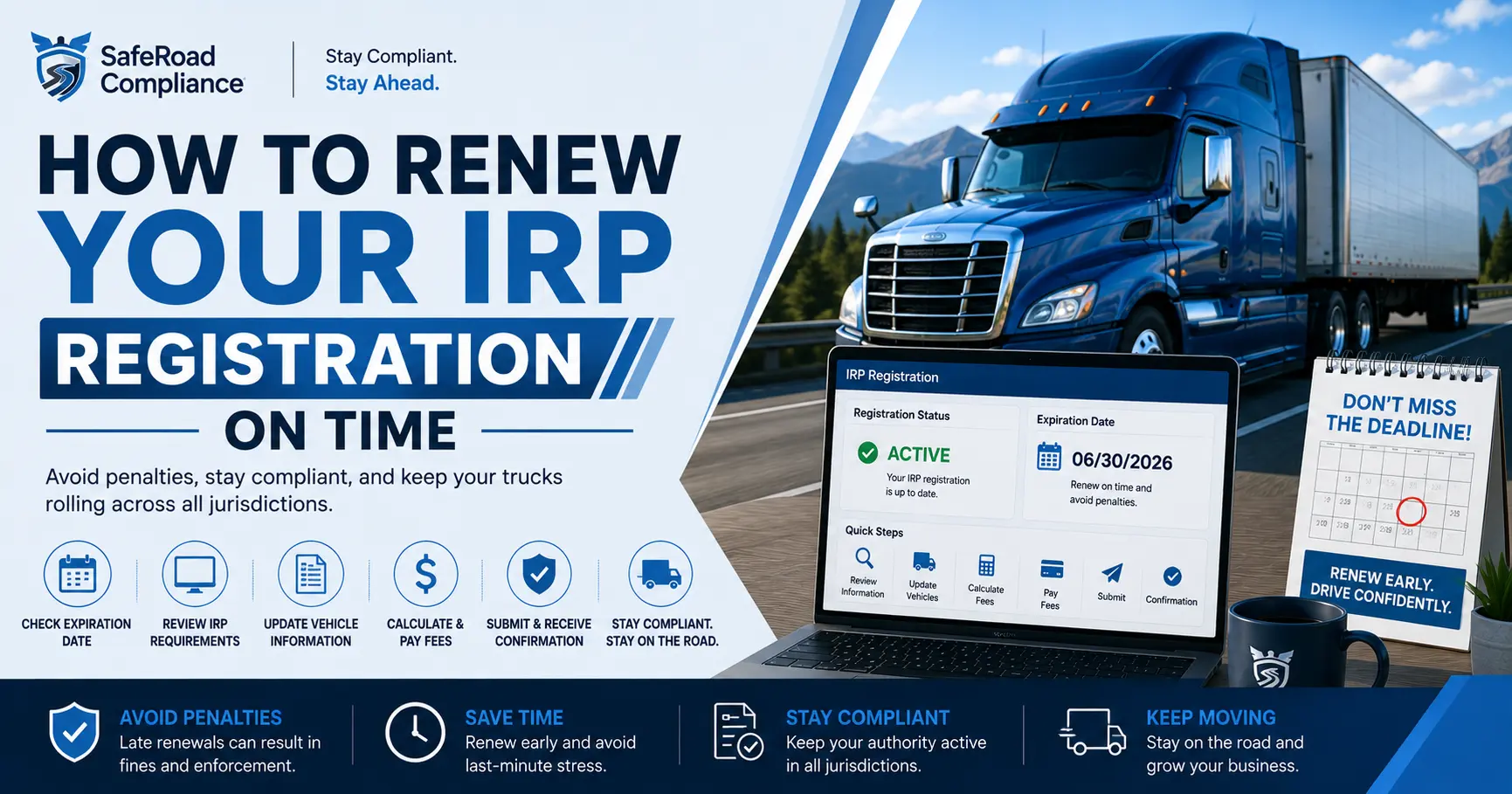
One missed deadline can ground your trucks overnight. That is the reality of failing to renew IRP registration on time. Many carriers assume renewal is a simple administrative task, but delays, missing documents, or incorrect mileage reporting can lead to expired apportioned plates, fines, and even operational shutdowns.
Across the United States, IRP renewal cycles vary by jurisdiction, but the consequences of non-compliance are consistent. You risk penalties, lost revenue, and compliance flags that impact your overall safety profile.
The challenge is not just renewing IRP, it is doing it accurately and proactively. From mileage reporting to fee calculations, even small mistakes can cause delays.
This guide breaks down the exact process to renew IRP registration on time, avoid penalties, and maintain uninterrupted operations.
What Is IRP Renewal and Why It Matters for Carriers
IRP renewal is the annual process of updating your apportioned registration so your fleet can legally operate across multiple jurisdictions. It ensures your registration fees are distributed based on miles traveled in each state.
When you renew IRP, you are essentially verifying:
- Fleet details
- Vehicle information
- Mileage data from the previous year
- Operational jurisdictions
If this information is inaccurate or incomplete, your renewal can be delayed or rejected.
Timely IRP renewal matters because:
- Expired plates can result in out-of-service violations
- Enforcement officers can flag non-compliant vehicles instantly
- Insurance and contracts may require valid registration
Many fleets underestimate how closely IRP connects with overall compliance. It is not just about plates, it reflects your operational credibility.
A structured renewal process ensures your fleet stays compliant, avoids penalties, and maintains uninterrupted operations.
When Should You Renew IRP Registration
Timing is critical when you renew IRP. Each jurisdiction has its own renewal schedule, but most follow an annual cycle with strict deadlines.
Carriers typically receive renewal notices 30 to 90 days before expiration. Waiting until the last minute increases the risk of:
- Processing delays
- Missing documentation
- Payment issues
- System errors
Best practice is to begin your renewal process at least 60 days before expiration.
Key timing considerations include:
- Renewal notice arrival date
- Internal data collection timeline
- Processing time at the IRP office
- Payment submission deadlines
If you operate a large fleet, the process may take longer due to multiple vehicles and complex mileage calculations.
Pro Tip:
Start preparing your mileage reports and documentation before receiving the renewal notice. This reduces last-minute pressure and improves accuracy.
Documents Required for IRP Renewal
To successfully renew IRP, carriers must submit accurate and complete documentation. Missing documents are one of the most common reasons for delays.
Typical documents required include:
- Previous year mileage records
- Vehicle titles or lease agreements
- Proof of insurance
- USDOT and MC details
- Tax filings if applicable
- Fleet vehicle list
Mileage records are especially important because IRP fees are calculated based on distance traveled in each jurisdiction.
Common documentation mistakes include:
- Inconsistent mileage data
- Missing trip reports
- Incorrect vehicle details
- Expired insurance certificates
Organizing documents in advance ensures a smooth renewal process.
Pro Tip:
Use digital recordkeeping systems to track mileage and documents throughout the year. This eliminates the stress of gathering data during renewal season.
Step-by-Step Process to Renew IRP Registration
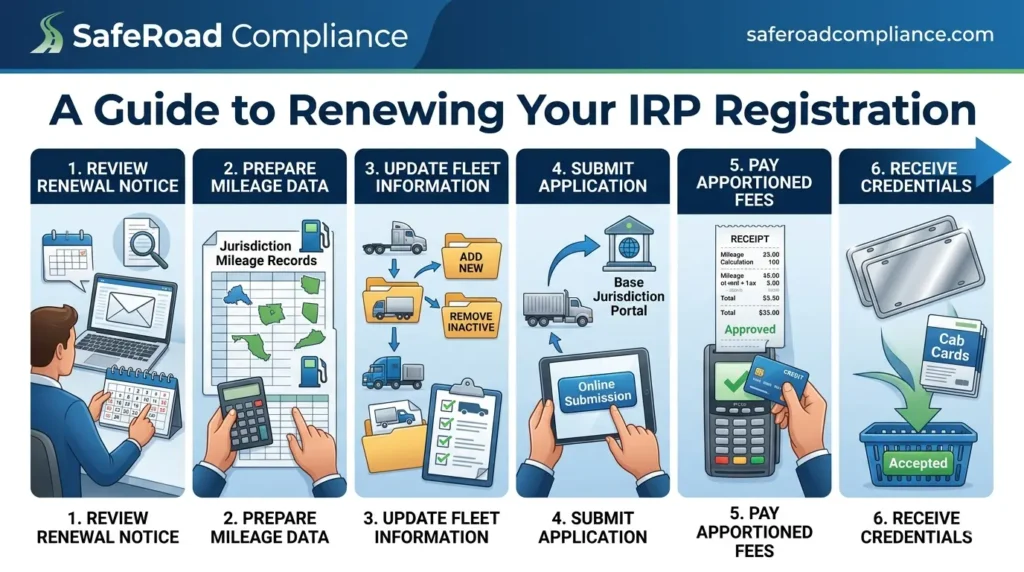
Renewing IRP involves a structured process that carriers must follow carefully.
Step 1: Review Renewal Notice
Check all details in your renewal notice, including fleet information and deadlines.
Step 2: Prepare Mileage Data
Compile accurate mileage records for all jurisdictions.
Step 3: Update Fleet Information
Verify vehicle details, add new units, and remove inactive ones.
Step 4: Submit Application
File your renewal application through your base jurisdiction.
Step 5: Pay Apportioned Fees
Fees are calculated based on mileage distribution.
Step 6: Receive Credentials
Once approved, you receive updated cab cards and apportioned plates.
Mistakes at any step can delay the process.
Pro Tip:
Double-check mileage entries before submission. Incorrect data can lead to audits or fee adjustments.
Common IRP Renewal Mistakes to Avoid
Many carriers face delays due to avoidable mistakes. Understanding these errors helps prevent costly disruptions.
Common mistakes include:
- Submitting inaccurate mileage data
- Missing renewal deadlines
- Failing to update fleet changes
- Incorrect jurisdiction reporting
- Late fee payments
Real-world example:
A mid-sized fleet delayed renewal due to incomplete mileage records. The result was a temporary suspension of operations and financial loss due to idle trucks.
To avoid these issues:
- Maintain accurate records year-round
- Set renewal reminders
- Use compliance systems for tracking
Insight:
Most IRP renewal problems are not due to complexity, but due to poor preparation.
How IRP Renewal Fees Are Calculated
IRP fees are based on apportioned mileage across jurisdictions. This means you pay fees proportional to the miles driven in each state.
Key factors influencing fees:
- Total fleet mileage
- Miles driven per jurisdiction
- Vehicle weight
- Number of vehicles
For example:
If 40 percent of your miles are in Texas, then 40 percent of your fees go to Texas.
Errors in mileage reporting can result in:
- Overpayment
- Underpayment leading to penalties
- Audit risks
Pro Tip:
Use automated mileage tracking tools to ensure accuracy and consistency.
Understanding fee calculation helps carriers plan budgets and avoid unexpected costs.
Pro Tips to Renew IRP Without Delays
Efficient IRP renewal requires planning and systemization.
Best practices include:
- Start early, at least 60 days before expiration
- Maintain year-round mileage tracking
- Use digital compliance tools
- Verify all documents before submission
- Monitor deadlines closely
Additional insights:
- Assign a dedicated compliance manager
- Conduct internal audits before renewal
- Keep backup copies of all records
Pro Tip:
Treat IRP renewal as a continuous process, not a once-a-year task.
Carriers that adopt proactive systems rarely face renewal delays.
To fully understand IRP compliance and its relationship with fuel taxes, explore:
- What Is IRP? Complete Guide for Truckers
- IFTA vs IRP: Key Differences
- Step-by-Step Guide to Applying for IRP Registration
These resources help build a complete compliance framework.
Key Takeaways
- IRP renewal is critical for uninterrupted interstate operations
- Start the renewal process at least 60 days early
- Accurate mileage reporting is essential for compliance
- Missing deadlines can lead to penalties and downtime
- Digital tools simplify IRP renewal and reduce errors
- Proactive planning prevents costly disruptions
Conclusion: Stay Ahead of IRP Deadlines
Renewing IRP on time is not just about compliance, it is about keeping your business moving without interruptions. Carriers that treat renewal as a proactive process avoid penalties, reduce stress, and maintain operational efficiency.
If managing IRP feels overwhelming, working with experts can make a significant difference. A structured system ensures accuracy, timely submission, and full compliance.
To simplify your renewal process and avoid costly delays, connect with a DOT Compliance Specialist now. Taking action early ensures your fleet stays compliant, efficient, and ready for the road.
FAQs
You should begin the renewal process at least 60 days before your expiration date to avoid delays.
Your vehicles may be placed out of service, and you could face fines and operational downtime.
Yes, you can add or remove vehicles when submitting your renewal application.
Fees are based on miles traveled in each jurisdiction and the vehicle’s weight.
Inaccurate mileage reporting is the most common and costly mistake.
No, timelines vary by jurisdiction, so always check with your base state.