Disclosure: Informational only. We are not FMCSA or USDOT. Always verify your status directly through official systems.
DOT audits do not usually fail because fleets ignore regulations. Most failures happen because fleets cannot prove compliance when FMCSA asks. Documents are missing, records are outdated, or proof exists but cannot be produced in time. From an enforcement perspective, missing documentation is treated the same as non-compliance.
DOT compliance software changes how fleets prepare for audits by replacing reactive document gathering with continuous audit readiness. Instead of scrambling when an audit notice arrives, fleets operate inside a system designed around FMCSA expectations. This article explains why audits fail, how proof gaps create enforcement risk, and how software prevents those failures before they happen.
Why Audits Fail (Even for “Compliant” Fleets)
Many fleets believe they are compliant because policies are in place and tasks are being handled. FMCSA audits, however, are not based on intentions or verbal confirmation. They are based on documentation, timelines, and consistency.
Audits fail when:
- Required records are missing or incomplete
- Documents are outdated or expired
- Files are not organized or accessible
- Proof cannot be produced within audit timelines
- Recordkeeping does not follow FMCSA structure
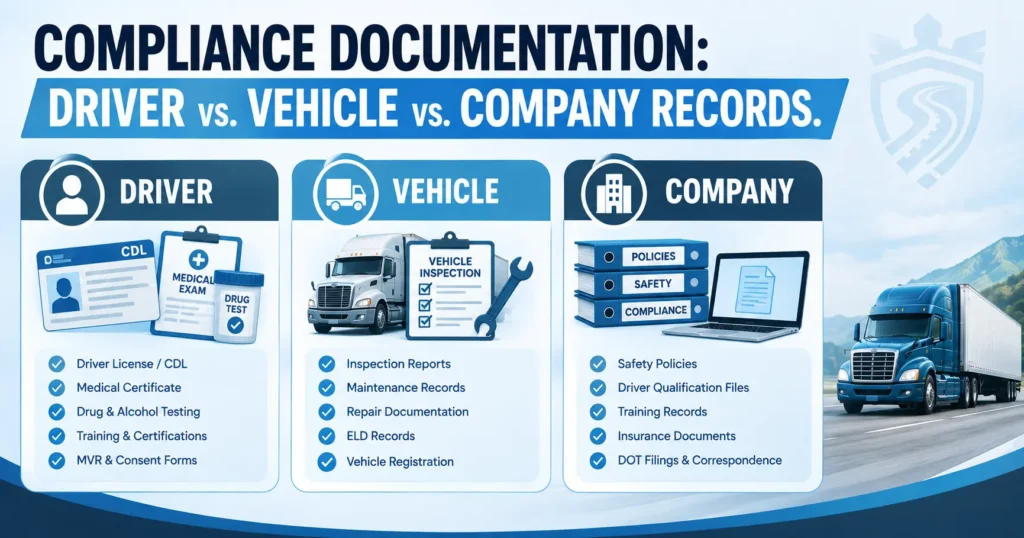
Common failure areas include driver qualification files, insurance records, vehicle inspections, drug and alcohol testing documentation, and hours of service records.
Even fleets that actively manage compliance can fail audits if records are scattered across spreadsheets, emails, and physical files. FMCSA interprets this as weak internal controls. Once auditors identify gaps, reviews often expand, increasing enforcement exposure.
Audit failure is rarely about ignoring rules. It is about failing to prove compliance systematically.
Missing Proof vs Actual Non-Compliance
FMCSA does not separate missing proof from actual non-compliance during audits. If documentation cannot be produced, the carrier is treated as non-compliant regardless of whether the activity occurred.
Examples of proof failures include:
- Completed inspections without retained DVIRs
- Valid insurance coverage without active FMCSA filings
- Qualified drivers without complete DQFs
- Drug testing conducted without accessible records
- Maintenance performed without supporting documentation
From an enforcement standpoint, compliance that cannot be verified does not exist. This creates a major risk for fleets relying on manual or fragmented systems.
Missing proof also increases:
- CSA score impact
- Probability of follow-up audits
- Authority suspension risk
- Financial penalties
DOT compliance software addresses this gap by ensuring proof exists, is current, and is always accessible.
How Software Prevents These Failures
DOT compliance software prevents audit failures by transforming compliance into a structured, system-based process. Instead of relying on memory and manual tracking, the system enforces consistency and visibility.
Key prevention mechanisms include:
- Centralized document storage aligned with FMCSA categories
- Automated tracking of expirations and renewals
- Standardized record formats
- Audit-ready organization of files
- Continuous compliance visibility
The system ensures that:
- Required documents are present
- Records are up to date
- Proof can be accessed immediately
- Compliance gaps are identified early
By maintaining continuous readiness, audits become verification events instead of discovery missions. Software does not replace compliance responsibility, but it prevents documentation failures that lead to enforcement action.
Real Audit Scenarios
In real FMCSA audits, time and structure matter. Auditors expect carriers to produce records quickly and in an organized format.
Manual compliance scenario:
- Documents stored across folders and emails
- Staff scrambling to locate records
- Delayed responses to audit requests
- Missing or outdated files discovered mid-audit
Software-based compliance scenario:
- Centralized access to all records
- Immediate document retrieval
- Clear audit trails
- Reduced audit scope and duration
The difference is not convenience. It is control. Auditors respond differently when fleets demonstrate structured compliance systems. This often reduces enforcement pressure and follow-up scrutiny.
Audit Confidence vs Audit Stress
Audit stress comes from uncertainty. Fleets using manual systems often do not know where gaps exist until FMCSA identifies them. This creates reactive compliance and elevated risk.
DOT compliance software creates audit confidence by:
- Making compliance visible at all times
- Highlighting missing or expiring records
- Maintaining standardized documentation
- Supporting proactive correction
Instead of fearing audits, fleets operate with confidence knowing their records are continuously audit-ready. This mindset shift reduces operational disruption and enforcement anxiety.
Key Takeaways
- DOT audits fail due to missing proof, not ignored rules
- FMCSA treats missing documentation as non-compliance
- Manual systems create audit blind spots
- Software enforces structure and visibility
- Continuous readiness reduces enforcement risk
- Audit confidence comes from system-based compliance
Conclusion
DOT compliance software does not guarantee a perfect audit, but it dramatically reduces the risk of audit failure caused by documentation gaps. By maintaining structured records, tracking expirations, and centralizing proof, fleets position themselves to meet FMCSA expectations with confidence.
In an enforcement environment where proof matters more than intent, system-based compliance is the difference between audit stress and audit control.
FAQs
Most audits fail due to missing or incomplete documentation rather than intentional non-compliance.
It reduces documentation-related violations by enforcing structure, visibility, and proactive tracking.
Yes. FMCSA treats missing documentation as non-compliance during audits.
It provides centralized, organized, and accessible records that meet FMCSA audit expectations.