Disclosure: Informational only. We are not FMCSA or USDOT. Always verify your status directly through official FMCSA systems.
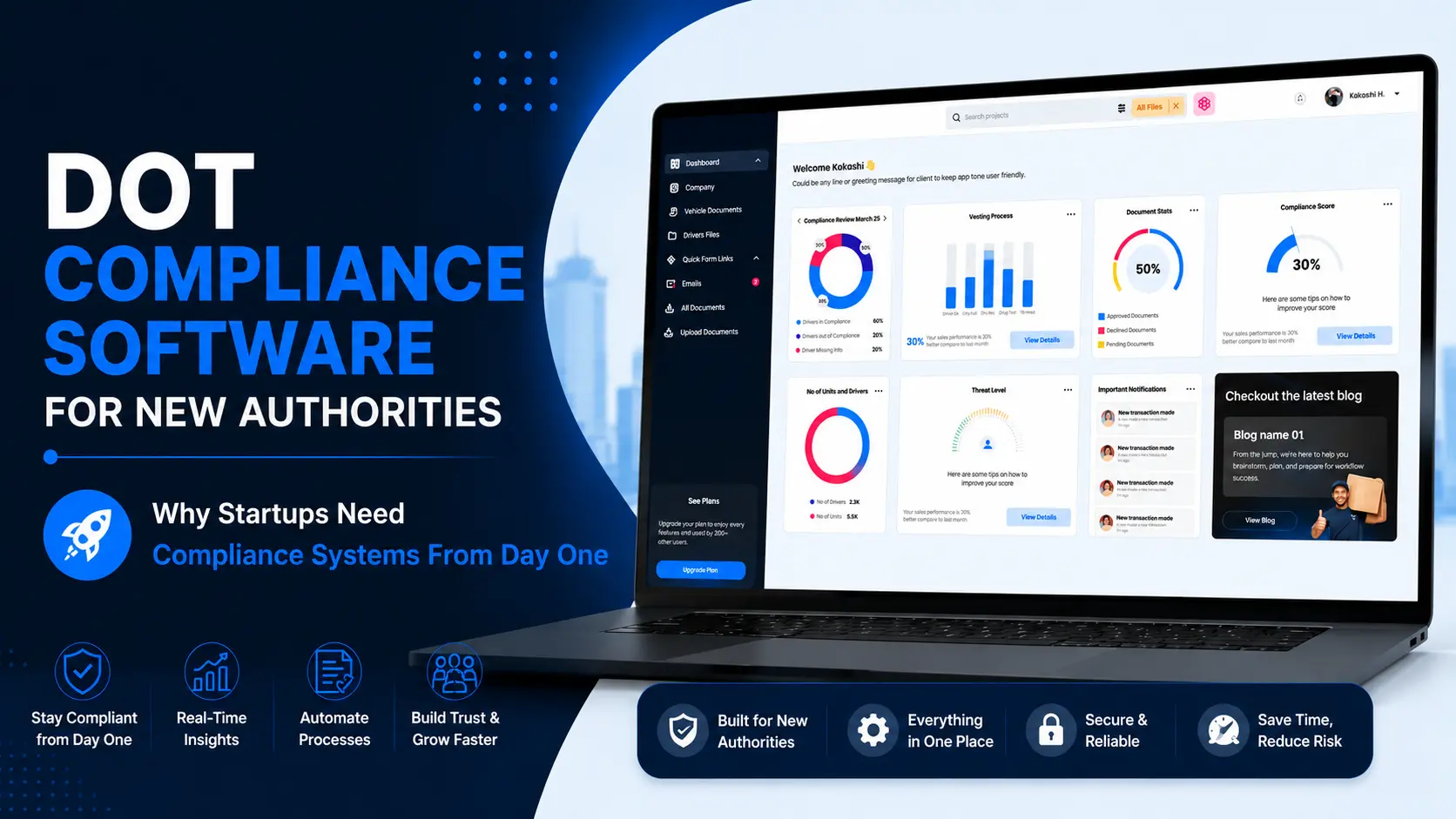
Why Startups Need Compliance Systems From Day One
Starting a trucking company is exciting, but obtaining your USDOT Number and operating authority is only the beginning. New motor carriers face strict compliance requirements from the Federal Motor Carrier Safety Administration (FMCSA), especially during the first year of operations.
Many new authorities assume compliance can be managed with spreadsheets, paper files, or reminders. Unfortunately, this approach often leads to missed deadlines, incomplete records, and failed audits.
That’s why more startup carriers are investing in new authority compliance software to stay organized, reduce risk, and prepare for FMCSA oversight from day one.
In this guide, we’ll explain the compliance risks new carriers face, what to expect from a New Entrant Safety Audit, and how DOT compliance software helps build a strong foundation for long-term success.
First-90-Day Compliance Risks
The first 90 days after receiving operating authority are often the most challenging period for a new carrier.
During this time, business owners are focused on:
- Finding loads
- Managing cash flow
- Hiring drivers
- Maintaining equipment
- Building customer relationships
Unfortunately, compliance responsibilities can easily get overlooked.
Common Compliance Risks During the First 90 Days
Missing Driver Qualification Documents
Many new carriers fail to properly establish Driver Qualification Files (DQFs) for themselves or newly hired drivers.
Incomplete Drug & Alcohol Program Enrollment
FMCSA-regulated drivers must participate in compliant drug and alcohol testing programs.
Missing Vehicle Maintenance Records
Preventive maintenance and inspection documentation are often neglected during startup operations.
Hours-of-Service Tracking Issues
Drivers may fail to maintain compliant records or misunderstand HOS requirements.
Expired Compliance Deadlines
Important filings and regulatory requirements can be missed when there is no system in place to track them.
Without a structured compliance process, these issues can quickly become audit findings and violations.
New Entrant Safety Audit Expectations
Every new motor carrier is subject to FMCSA’s New Entrant Safety Assurance Program.
Typically, carriers can expect a New Entrant Safety Audit within their first 12 months of operation.
What Auditors Usually Review
Driver Qualification Files
Auditors verify that all required driver documentation is properly maintained.
Hours-of-Service Records
Inspectors review logs, ELD records, and supporting documentation.
Drug and Alcohol Program Compliance
Proof of enrollment and testing program participation is commonly requested.
Vehicle Inspection & Maintenance Records
Auditors examine maintenance files, DVIRs, and annual inspections.
Accident Register
Carriers must maintain records of reportable accidents.
What Happens If You Fail?
Failure to provide required records may result in:
- Corrective action requirements
- Increased FMCSA monitoring
- Compliance investigations
- Potential operating authority issues
Being audit-ready from the beginning significantly reduces these risks.
How Software Keeps Startups Organized
Managing compliance manually becomes increasingly difficult as a business grows.
Modern DOT compliance software helps new authorities centralize critical records and automate compliance tracking.
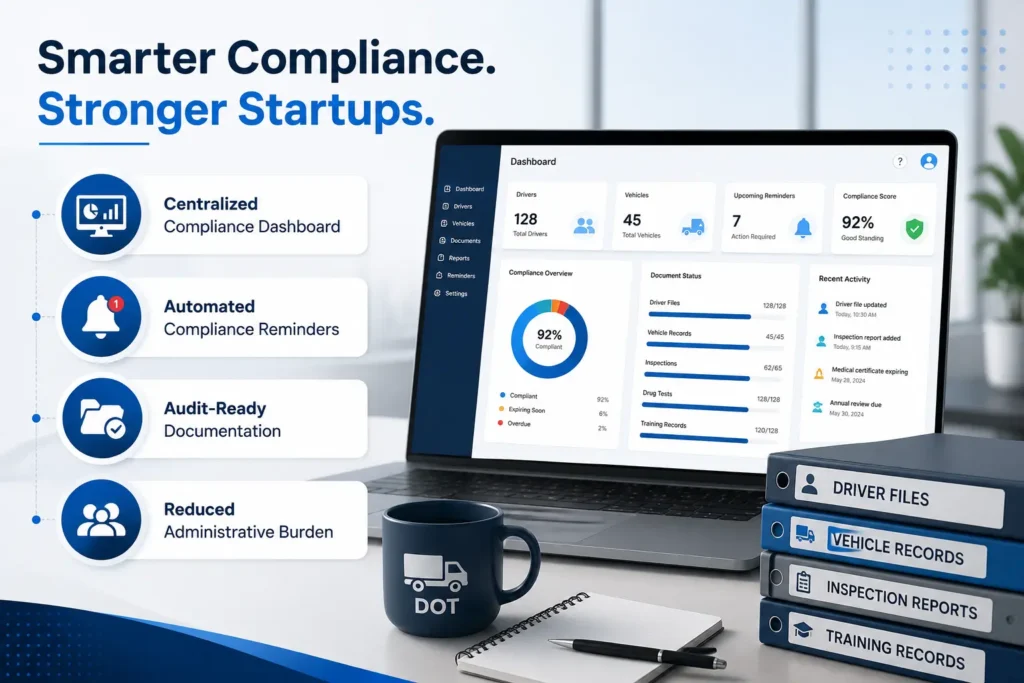
Centralized Compliance Dashboard
Instead of storing documents across multiple systems, compliance software keeps everything in one place.
Examples include:
- Driver files
- Vehicle maintenance records
- Inspection reports
- Drug testing documentation
- Training records
Automated Compliance Reminders
Software can notify carriers when:
- Medical certificates are expiring
- Annual reviews are due
- Maintenance inspections are approaching
- Compliance deadlines are approaching
Audit-Ready Documentation
When records are organized digitally, responding to audit requests becomes much easier.
Reduced Administrative Burden
Instead of spending hours managing spreadsheets, carriers can focus on growing their business while maintaining compliance.
Common New Authority Mistakes
Many startup carriers make the same compliance mistakes repeatedly.
Waiting Until an Audit Is Scheduled
Compliance should begin immediately after receiving operating authority, not when an audit notice arrives.
Using Paper Files Only
Paper-based systems increase the risk of lost records and missed deadlines.
Ignoring Driver Qualification Requirements
Incomplete DQFs are among the most common FMCSA violations.
Poor Maintenance Documentation
Vehicle maintenance performed without proper records still creates compliance problems.
Failing to Monitor Compliance Deadlines
Missing important filings can result in unnecessary enforcement actions.
Not Using Technology
Modern compliance software helps eliminate many manual tracking errors that commonly affect startup carriers.
Building Compliance Habits Early
The most successful motor carriers build compliance into their daily operations from the start.
Establish Written Procedures
Create documented processes for:
- Driver onboarding
- Vehicle inspections
- Maintenance tracking
- Hours-of-Service monitoring
- Drug and alcohol testing
Conduct Internal Reviews
Regularly review compliance records before FMCSA requests them.
Train Drivers Consistently
Drivers should understand their responsibilities regarding:
- HOS compliance
- Vehicle inspections
- Drug and alcohol requirements
- Recordkeeping procedures
Use Compliance Software Daily
Compliance software delivers the greatest value when used consistently rather than only during audits.
Strong compliance habits established early can help prevent costly problems as your fleet grows.
Why New Authorities Should Invest in Compliance Software
For many startups, compliance software is no longer a luxury, it’s a necessity.
Key Benefits
- Improved FMCSA startup compliance
- Reduced administrative workload
- Better audit readiness
- Automated reminders and alerts
- Centralized record management
- Reduced risk of violations
- Improved operational efficiency
The cost of compliance software is often significantly lower than the cost of violations, failed audits, or operational disruptions.
Conclusion
The first year of operating authority is one of the most important periods in a motor carrier’s journey. New authorities face increased regulatory scrutiny, strict documentation requirements, and the possibility of a New Entrant Safety Audit.
Investing in reliable new authority compliance software helps carriers stay organized, automate critical tasks, maintain audit-ready records, and build strong compliance habits from day one.
Rather than reacting to compliance issues after they occur, successful carriers use technology to stay proactive and avoid costly mistakes.
If you’re starting a trucking company or recently received your authority, now is the best time to implement a compliance system that supports long-term growth and FMCSA compliance.
Key Takeaways
- New authorities face significant compliance risks during their first year of operation.
- FMCSA may conduct a New Entrant Safety Audit within the first 12 months.
- Driver qualification files, HOS records, and maintenance documentation are common audit focus areas.
- Compliance software helps automate reminders and centralize records.
- Building compliance habits early reduces future violations and audit risks.
- Digital compliance management improves organization and efficiency.
- Proactive compliance is less expensive than corrective action after violations occur.
Frequently Asked Questions
New authority compliance software helps startup trucking companies manage FMCSA compliance requirements, store records, track deadlines, and prepare for audits.
New carriers face numerous regulatory requirements and deadlines. Compliance software helps prevent missed filings, lost records, and audit issues.
A New Entrant Safety Audit is an FMCSA review conducted during a carrier’s first year of operation to evaluate compliance with safety regulations.
Yes. Most compliance systems help organize, store, and track driver qualification documents and expiration dates.
Carriers should maintain driver files, maintenance records, inspection reports, HOS documentation, accident registers, and drug testing records.
Ideally, compliance software should be implemented immediately after receiving operating authority to establish proper recordkeeping from day one.
Combining written procedures, driver training, internal audits, and compliance software provides the strongest foundation for FMCSA startup compliance.
Start Your Compliance System Today
Don’t wait until an audit notice arrives to organize your compliance program.
SafeRoad Compliance provides an all-in-one compliance platform designed to help new authorities stay organized, audit-ready, and fully compliant.
Access the SafeRoad Compliance Portal
Schedule a Free Compliance Consultation
Our team can help you build a compliance system that supports growth while keeping your business protected from costly FMCSA violations.