Disclosure: Informational only. We are not FMCSA or USDOT. Always verify your status directly through official FMCSA systems.
Introduction: One Missed Update Can Trigger DOT Problems
Many carriers don’t realize that a simple paperwork issue can put their entire operation at risk. Missing or incorrectly filing your MCS-150 form can lead to inactive USDOT status, compliance violations, and even operational shutdowns.
This is not just a formality. The MCS-150 form is a critical part of your compliance profile with the Federal Motor Carrier Safety Administration. It directly affects your safety rating, visibility in the system, and eligibility to operate legally in the United States.
The biggest mistake carriers make is assuming they only need to file when something changes. In reality, every carrier must complete a biennial update, even if nothing has changed.
Understanding how the MCS-150 works, when to update it, and how to avoid common mistakes is essential for maintaining compliance and avoiding penalties.
This guide breaks down everything you need to know about the MCS-150 form and updates so you can stay fully compliant and audit-ready.
MCS-150 Form: Download MCS-150 Form
What Is MCS-150 and Why It Matters
The MCS-150 form, also known as the Motor Carrier Identification Report, is used by FMCSA to collect and maintain essential information about motor carriers and their operations.
It includes details such as:
- Company name and address
- USDOT number
- Type of operation
- Number of drivers and vehicles
- Cargo classification
- Mileage information
This data helps FMCSA assess risk, track safety performance, and determine inspection priorities.
Why it matters:
- It directly impacts your Compliance, Safety, Accountability profile
- It determines how your company appears in FMCSA systems
- It influences audits and enforcement decisions
If your MCS-150 is outdated or incorrect, it can signal compliance issues to regulators.
Insight:
Many carriers overlook how closely this form is tied to their safety profile. Keeping it accurate is not optional, it is a core compliance requirement.
What Is a Biennial Update and Who Needs It
A biennial update is a mandatory filing requirement where carriers must update their MCS-150 form every two years, regardless of whether any information has changed.
This requirement applies to:
- Interstate motor carriers
- Freight brokers
- Passenger carriers
- Hazmat carriers
The filing schedule is based on your USDOT number. Specifically:
- The last digit determines the month
- The second-to-last digit determines the year
For example:
- If your USDOT ends in 5, you must file in May
- If the second-to-last digit is odd, you file in odd-numbered years
Even if your business has not changed, you are still required to file.
Common misconception:
Many carriers think no changes mean no filing is needed. This is incorrect and leads to violations.
When to File MCS-150 Updates
Timing is critical when filing your MCS-150 updates. Missing deadlines can result in your USDOT number becoming inactive.
You must file:
- Every two years based on your schedule
- Whenever there are significant changes to your business
Situations requiring immediate updates include:
- Change in company name or address
- Increase or decrease in fleet size
- Change in operation type
- Ownership changes
- Safety or compliance updates
Failing to update in these scenarios can create inconsistencies in FMCSA records.
Pro Tip:
Set reminders at least 60 days before your due date. Early preparation helps avoid last-minute errors.
Staying ahead of deadlines ensures uninterrupted operations and avoids unnecessary compliance risks.
Step-by-Step Guide to Filing the MCS-150 Form
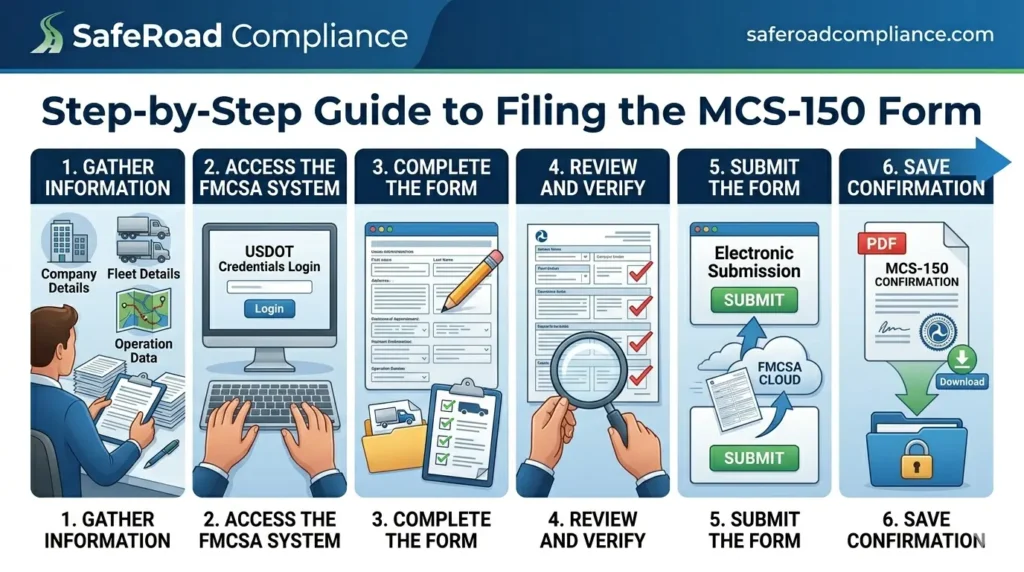
Filing the MCS-150 form is straightforward when you follow a structured process.
Step 1: Gather Information
Collect accurate company, fleet, and operational data.
Step 2: Access the FMCSA System
Log in using your USDOT credentials.
Step 3: Complete the Form
Fill in all required fields, ensuring accuracy.
Step 4: Review and Verify
Double-check all entries before submission.
Step 5: Submit the Form
File electronically for faster processing.
Step 6: Save Confirmation
Keep a copy for your records.
Common issues during filing:
- Incorrect mileage reporting
- Missing vehicle data
- Outdated company information
Insight:
Even small errors can trigger compliance flags or delays in processing.
Using a structured approach ensures accuracy and reduces the risk of rejection.
Common MCS-150 Mistakes That Lead to Violations
Many carriers face compliance issues due to simple but avoidable mistakes.
Common mistakes include:
- Missing biennial update deadlines
- Providing inaccurate mileage data
- Failing to update fleet changes
- Incorrect operation classification
- Using outdated company information
Real-world scenario:
A carrier failed to update their fleet size after expansion. During an audit, the discrepancy raised concerns, leading to further investigation.
Consequences of mistakes:
- USDOT number deactivation
- Increased audit risk
- Penalties and fines
- Negative impact on safety profile
Pro Tip:
Always verify your data before submission. Treat the MCS-150 as a critical compliance document, not routine paperwork.
Avoiding these mistakes ensures smoother audits and better compliance standing.
How MCS-150 Affects Your DOT Compliance Profile
The MCS-150 form plays a major role in how FMCSA evaluates your business.
It impacts:
- Safety ratings
- Inspection prioritization
- Compliance reviews
- Risk assessment
Outdated or inaccurate data can:
- Trigger audits
- Increase scrutiny
- Affect your CSA scores
For example:
If your reported mileage is inconsistent with inspection data, it may raise red flags.
Insight:
FMCSA relies heavily on MCS-150 data to identify high-risk carriers.
Keeping your information updated ensures your profile reflects your actual operations.
This improves your credibility and reduces the likelihood of enforcement actions.
Pro Tips to Stay Compliant with MCS-150 Updates
Maintaining compliance requires a proactive approach.
Best practices include:
- Schedule biennial update reminders
- Maintain accurate records year-round
- Review company data regularly
- Use digital compliance tools
- Assign responsibility to a compliance manager
Additional insights:
- Conduct internal audits before filing
- Keep backup copies of submissions
- Monitor FMCSA updates and requirements
Pro Tip:
Treat MCS-150 updates as part of your ongoing compliance strategy, not a one-time task.
Carriers who adopt proactive systems rarely face compliance issues.
Want to Dive Deeper? Start Here
To deepen your understanding of MCS-150 compliance, explore:
- USDOT Biennial Update (MCS-150): What it is & when to file
- Form MCS-150 Filing Guide
These resources provide additional insights and strengthen your compliance knowledge.
Key Takeaways
- MCS-150 is a mandatory compliance form for all motor carriers
- Biennial updates are required even if no changes occur
- Missing deadlines can lead to USDOT deactivation
- Accurate data is essential for compliance and safety ratings
- Proactive planning prevents violations and audit risks
Conclusion: Stay Ahead of MCS-150 Compliance
The MCS-150 form is more than just a regulatory requirement, it is a key part of your compliance foundation. Missing updates or submitting incorrect data can lead to serious operational risks.
Carriers that take a proactive approach, maintain accurate records, and file on time avoid penalties and maintain strong compliance standing.
If you want to eliminate errors and ensure your filings are always accurate, working with experts can simplify the entire process.
Get help with your MCS-150 biennial update here.
Or schedule a consultation with a DOT compliance specialist.
Taking action today ensures your business stays compliant, efficient, and ready for growth.
FAQs
It is used by FMCSA to collect and maintain carrier information for safety and compliance monitoring.
Every two years, based on your USDOT number schedule.
Yes, biennial updates are mandatory even without changes.
Your USDOT number may become inactive, affecting your operations.
Yes, you can file updates anytime when changes occur in your business.
Missing the biennial update or submitting inaccurate information.