Disclosure: Informational only. We are not FMCSA or USDOT. Always verify your status directly through official FMCSA systems.
The trucking industry is preparing for one of the biggest FMCSA registration changes in years. The Federal Motor Carrier Safety Administration is rolling out Motus: USDOT Registration System, a modernized platform designed to replace outdated registration processes, improve fraud prevention, and simplify compliance management for carriers, brokers, and freight forwarders.
For trucking companies, owner-operators, brokers, and compliance service providers, this transition is more than just a software update. It will change how FMCSA registration, account management, identity verification, and operating authority processes work moving forward.
If you currently operate under a USDOT Number or MC Number, this guide explains what Motus is, how it works, what changes are coming, and how to prepare before the full rollout.
What Is Motus?
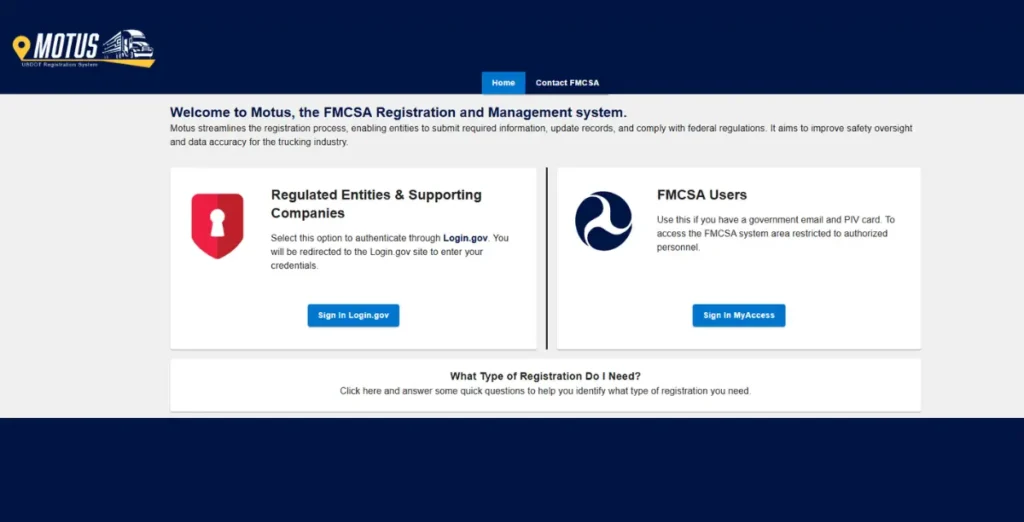
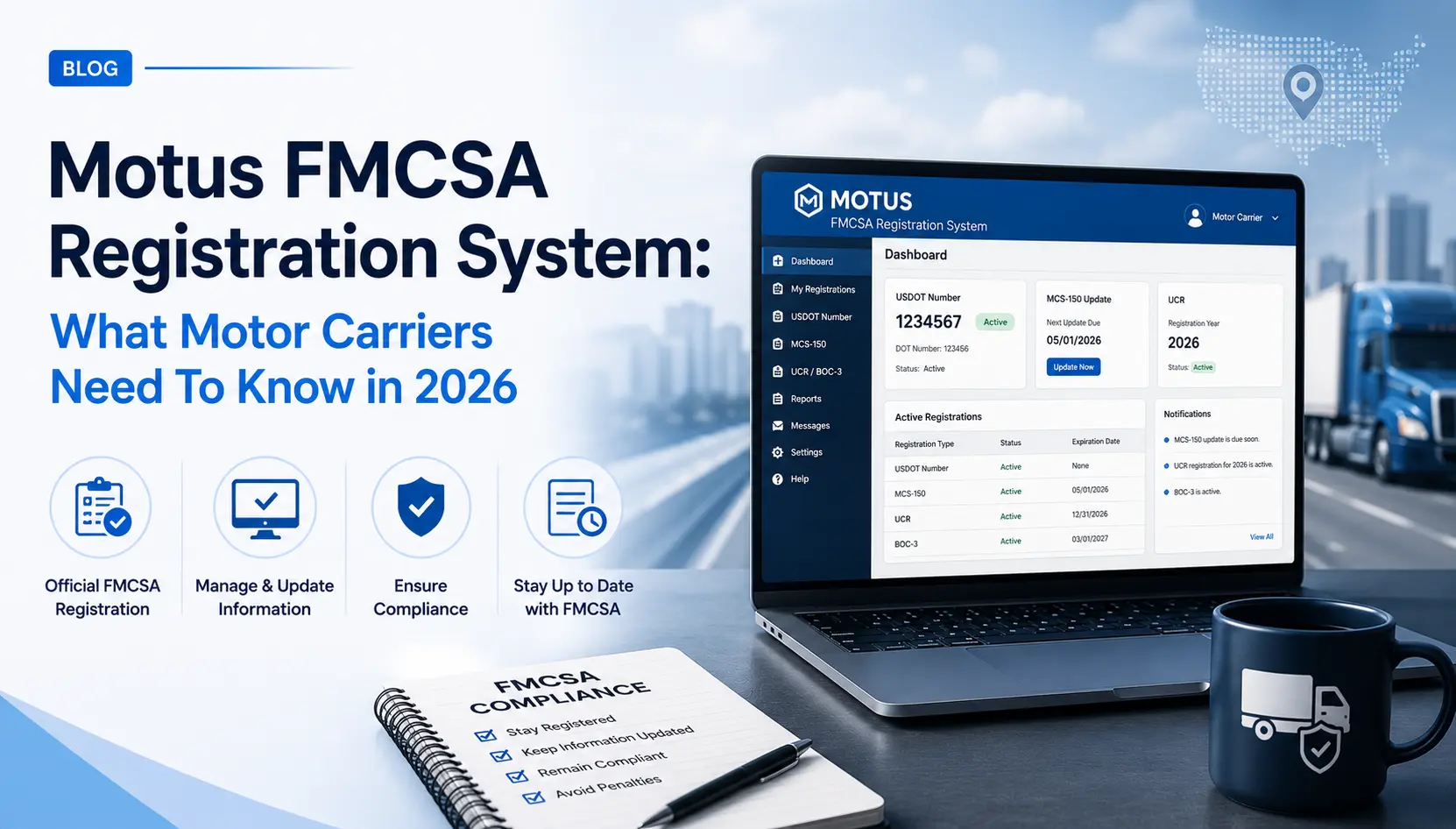
Motus is FMCSA’s new online registration system created to modernize the agency’s registration infrastructure. The name “Motus” comes from the Latin word for movement or progress.
The platform is designed to create a single, centralized dashboard where regulated entities can manage registration-related actions online. According to FMCSA, the system aims to:
- Simplify registration workflows
- Improve fraud prevention
- Streamline identity verification
- Reduce outdated manual processes
- Create a mobile-friendly experience
- Modernize USDOT registration management
The agency plans to phase the system rollout over time. Phase I began in December 2025 for supporting companies such as BOC-3 filers, insurance providers, and transportation service providers. Phase II is expected to expand access to all regulated entities in 2026.
Download Document: What is Motus Fact Sheet
Why FMCSA Is Replacing the Current System
For years, FMCSA registration processes have been fragmented across multiple systems, including:
- Unified Registration System (URS)
- Motor Carrier Management Information System (MCMIS)
- Licensing and Insurance System
- Legacy portal systems
This created confusion, duplicate workflows, and opportunities for fraud.
Motus is intended to unify these systems into one centralized registration environment. FMCSA states the modernization effort also supports the statutory requirement for a unified registration system under federal law.
The agency is also responding to industry concerns regarding:
- Double brokering fraud
- Identity theft
- Unauthorized account changes
- Fake carrier activity
- Outdated account security practices
Key Features of the New Motus System
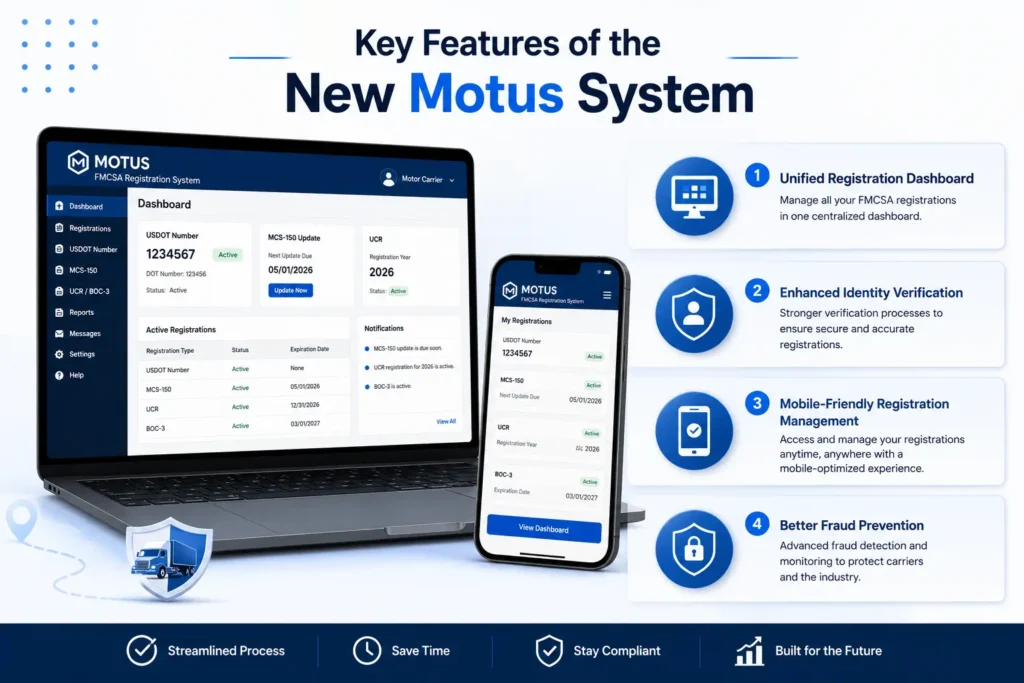
1. Unified Registration Dashboard
Motus combines registration actions into one secure online dashboard. Instead of using multiple portals, carriers and brokers will eventually manage everything from a single platform.
This includes:
- USDOT registration updates
- Operating authority management
- Entity profile management
- Registration lifecycle actions
- Compliance-related registration tasks
FMCSA says the platform will provide a more intuitive and user-friendly experience for registrants.
2. Enhanced Identity Verification
One of the biggest changes involves identity verification requirements.
FMCSA partnered with IDEMIA to implement stronger identity-proofing procedures designed to reduce fraud and improve system security.
Under Motus, users may need to verify their identity before accessing or modifying registration records. The agency stated that identity verification will apply to new applicants and eventually existing registrants accessing the system.
This change is expected to help reduce:
- Unauthorized account takeovers
- Fraudulent authority applications
- Double brokering schemes
- Fake carrier registrations
3. Mobile-Friendly Registration Management
FMCSA has confirmed that Motus will be mobile-friendly and accessible across devices.
This is important for:
- Owner-operators managing compliance on the road
- Small fleets without dedicated compliance departments
- Brokers handling authority management remotely
The new system is expected to make registration actions easier to complete without relying on outdated desktop-only systems.
4. Better Fraud Prevention
Fraud prevention is a major focus of the Motus rollout.
The trucking industry has seen a rise in:
- Identity theft
- Carrier impersonation
- Fraudulent MC authority usage
- Double brokering scams
FMCSA states that Motus includes enhanced verification tools and stronger security protocols to improve data integrity and reduce fraudulent activity.
Will MC Numbers Be Eliminated?
There has been significant industry discussion regarding the future of MC Numbers.
FMCSA has previously explored transitioning toward a unified USDOT identification system as part of registration modernization efforts. Some industry discussions suggest that MC Numbers may eventually be phased out or replaced with USDOT-based identifiers. However, FMCSA has also clarified that the initial Motus release will not immediately eliminate MC/FF docket numbers.
For now:
- Existing MC Numbers remain active
- Existing authority structures continue functioning
- Carriers should continue maintaining current registrations
Additional changes may occur later as FMCSA expands modernization efforts.
Important Dates Carriers Should Know
December 8, 2025
Phase I launched for supporting companies including:
- BOC-3 filers
- Insurance companies
- Transportation service providers
2026
Phase II is expected to expand Motus access to all FMCSA registrants, including:
- Motor carriers
- Freight brokers
- Freight forwarders
September 30, 2025
FMCSA stopped accepting paper transactions for many registration-related services as part of its digital modernization initiative.
How To Prepare for Motus
FMCSA recommends that carriers prepare early before the full transition begins.
Update Your FMCSA Portal Account
Carriers should:
- Verify account access
- Update email addresses
- Confirm phone numbers
- Ensure authorized users are accurate
Outdated information could create delays when Motus becomes fully available.
Complete Identity Verification Requirements
Because FMCSA is increasing identity verification standards, companies should prepare required documentation in advance.
This may include:
- Government-issued identification
- Business verification records
- Authorized representative documentation
Review Your MCS-150 Information
Incorrect company details can create compliance problems during the transition.
Review:
- Business address
- Phone numbers
- Email addresses
- Entity ownership information
- Fleet details
Monitor FMCSA Updates
FMCSA continues releasing guidance related to:
- Registration modernization
- Motus rollout phases
- Security updates
- Identity verification procedures
Companies should monitor official FMCSA communications closely.
How Motus Could Affect Compliance Companies
Compliance service providers will likely play a major role during the transition.
Many trucking companies already rely on third-party compliance experts for:
- USDOT registration
- BOC-3 filings
- Biennial updates
- Authority reinstatement
- Insurance filings
As Motus introduces new identity verification and registration workflows, carriers may increasingly seek professional guidance to avoid errors, delays, or compliance issues.
This creates a major opportunity for DOT compliance agencies to provide:
- Registration support
- Motus setup assistance
- FMCSA account preparation
- Identity verification help
- Compliance consulting
What Small Carriers Should Watch Closely
Small fleets and owner-operators may experience the biggest learning curve during the transition.
Potential challenges include:
- Portal access issues
- Identity verification delays
- Account recovery complications
- Incorrect registration information
- Missed updates
Preparing early can help reduce disruptions once the system becomes mandatory.
Is Motus Mandatory?
FMCSA is positioning Motus as the agency’s future registration platform. Over time, regulated entities will likely need to use the system for registration-related activities.
The agency states that the system will satisfy statutory requirements related to the Unified Registration System modernization initiative.
Final Thoughts
Motus represents one of the largest FMCSA registration modernization efforts in years. The transition is designed to improve efficiency, strengthen fraud prevention, simplify registration management, and create a more secure system for the trucking industry.
For motor carriers, brokers, and freight forwarders, preparation is critical. Updating FMCSA account information, understanding the new verification requirements, and staying informed about upcoming changes can help avoid unnecessary compliance issues during the rollout.
As FMCSA continues expanding the system in 2026, trucking companies that prepare early will likely experience a smoother transition into the next generation of USDOT registration management.
For businesses that need help navigating FMCSA registration changes, working with an experienced compliance partner can reduce risk, save time, and ensure all regulatory requirements are handled properly.
Key Takeaways
- Motus is FMCSA’s new registration modernization platform for carriers, brokers, and freight forwarders.
- The system aims to simplify USDOT registration management and improve fraud prevention.
- Enhanced identity verification requirements will become part of the registration process.
- FMCSA is transitioning away from outdated legacy systems toward a unified digital platform.
- Carriers should update their FMCSA portal information before the full rollout expands in 2026.
- Compliance preparation now can help avoid delays, registration issues, and authority disruptions later.
- Working with a DOT compliance expert can make the Motus transition faster and easier.
Sources & References
FAQs
Motus is FMCSA’s new registration platform designed to modernize USDOT and operating authority management for carriers, brokers, and freight forwarders.
FMCSA began rolling out Motus in phases starting in late 2025, with broader access expected throughout 2026.
Currently, MC Numbers remain active. FMCSA has discussed long-term modernization plans, but there is no immediate elimination of MC Numbers.
Yes. FMCSA is implementing stronger identity verification requirements to reduce fraud and improve registration security.
Carriers should update their FMCSA portal information, verify business details, review MCS-150 records, and monitor FMCSA announcements.
Motus is part of FMCSA’s broader registration modernization initiative and is expected to centralize multiple registration functions into one system.
Yes. DOT compliance companies can assist with registration updates, account setup, authority management, biennial updates, and compliance preparation.
DOT Compliance Assistance by SafeRoad Compliance
Need Help Preparing for the FMCSA Motus Transition?
Avoid registration delays, compliance mistakes, and authority issues with professional DOT compliance support.
At SafeRoad Compliance, we help trucking companies, owner-operators, brokers, and freight businesses stay compliant with FMCSA regulations and registration requirements.
Our Services Include:
- USDOT Number Registration
- MC Authority Filing
- Biennial Updates (MCS-150)
- BOC-3 Filing
- UCR Registration
- FMCSA Portal Assistance
- Motus Registration Preparation