Disclosure: Informational only. We are not FMCSA or USDOT. Always verify your status directly through official FMCSA systems.
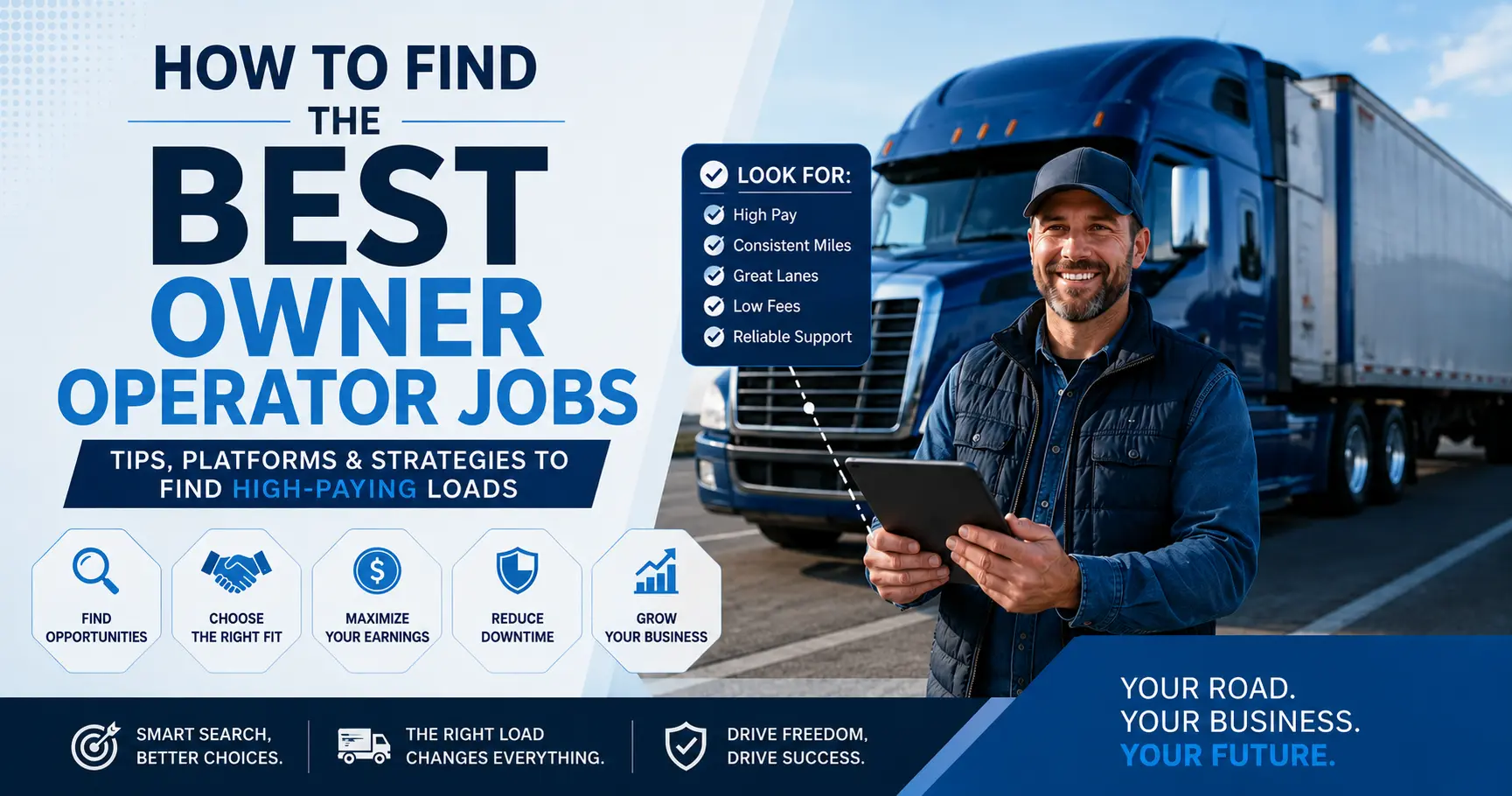
Finding the right owner operator jobs is about more than choosing the highest advertised rate. The best trucking opportunity should fit your equipment, operating area, experience, business goals, and compliance status.
Whether you operate one truck or manage a small fleet, taking time to evaluate each carrier opportunity can help you avoid poor-fit contracts and find opportunities that make sense for your business.
If you are still researching how to start your business as an owner operator, see our complete guide on How to Become an Owner Operator. If your business is already established and you’re ready to explore opportunities, this guide focuses specifically on finding and evaluating owner operator jobs.
What Are Owner Operator Jobs?
Owner operator jobs are trucking opportunities where an independent trucking professional operates their own commercial vehicle while working with a carrier, broker, or transportation company under an agreed business arrangement.
Depending on the opportunity, an owner operator may haul:
- Dry van freight
- Reefer freight
- Flatbed loads
- Regional freight
- Local deliveries
- Long-haul or OTR freight
- Specialized transportation
The exact requirements, pay structure, freight availability, and operating expectations can vary significantly between carriers.
That is why comparing opportunities carefully is important.
Where Can You Find Owner Operator Trucking Jobs?
Owner operator opportunities can come from several sources, including carrier websites, trucking job platforms, industry networks, referrals, and specialized application services.
When searching online, use specific terms such as:
- Owner operator jobs
- Owner operator trucking jobs
- Owner operator opportunities
- Local owner operator jobs
- Regional owner operator jobs
- OTR owner operator jobs
- Owner operator lease-on opportunities
- Independent truck driver opportunities
Don’t focus only on advertised pay. A carrier offering a higher gross rate may have additional fees, equipment requirements, insurance costs, or operating conditions that affect your actual earnings.
What Should You Look for in an Owner Operator Opportunity?
A good opportunity should fit your business rather than simply look attractive in an advertisement.
1. Freight and Operating Area
Consider whether the carrier provides freight that matches your preferred lanes and operating region.
Ask questions such as:
- Is the freight local, regional, or OTR?
- What states or lanes are commonly available?
- How consistent is the freight?
- Are loads offered throughout the week?
- Does the freight match your equipment?
A strong rate means little if the available freight doesn’t fit your operation.
2. Pay Structure
Understand exactly how compensation works before accepting an opportunity.
Depending on the carrier, compensation may be based on:
- Percentage of revenue
- Rate per mile
- Flat rate
- Load-specific compensation
- Other agreed arrangements
Also ask about deductions, administrative fees, fuel programs, escrow requirements, and other potential costs.
Always compare the net business opportunity, not just the advertised gross amount.
3. Equipment Requirements
Some carriers may require specific equipment, model years, cargo capabilities, or safety features.
Before applying, determine whether your truck meets the carrier’s requirements.
If you operate multiple trucks, also check whether the carrier accepts fleet owners and what additional requirements apply.
Get Your Compliance Information Ready
A complete and accurate application can make the review process easier.
Depending on the opportunity, you may need information such as:
- USDOT Number
- MC Number, when applicable
- CDL information
- Business contact information
- Truck and equipment details
- Insurance information
- Driver information
- Operating authority information
If you need to obtain a USDOT Number, SafeRoad Compliance provides USDOT Number Registration assistance.
Businesses that need operating authority can also review MC Number Registration services.
Keeping these details current is important when applying for new opportunities.
Keep Your Carrier and Driver Records Current
Compliance readiness can also affect how smoothly an application moves forward.
Owner operators and carriers may need to maintain appropriate driver records, qualification documents, and regulatory filings.
For example, SafeRoad Compliance provides Driver Qualification File Management and Driver Vetting services to help transportation businesses organize and manage important driver compliance requirements.
If you operate under requirements involving DOT-regulated drug and alcohol testing, a Drug & Alcohol Consortium can also help manage applicable program requirements.
Don’t Ignore Ongoing DOT Requirements
Finding an opportunity is only part of running a successful trucking operation. Staying compliant after you begin working with a carrier is equally important.
Depending on your operation, ongoing requirements may include:
- MCS-150 updates
- UCR registration
- IFTA reporting
- BOC-3 filing
- Driver qualification records
- Drug and alcohol program requirements
- Vehicle and safety documentation
- DOT audit preparation
For example, SafeRoad Compliance offers MCS-150 Biennial Update and UCR Filing services.
If your operation is subject to IFTA requirements, IFTA Quarterly Reporting Services can help with recurring fuel tax reporting.
For carriers requiring process-agent filing, BOC-3 Filing is another important compliance service to understand.
Questions to Ask Before Accepting an Opportunity
Before committing to an owner operator trucking opportunity, ask the carrier for clear answers about:
- How is the owner operator paid?
- What expenses or deductions apply?
- What freight and lanes are available?
- How frequently are loads offered?
- What equipment requirements apply?
- Who handles dispatch?
- What insurance requirements apply?
- Are there minimum performance requirements?
- What documentation must be submitted?
- What happens if freight volume changes?
Getting these answers upfront can help you compare opportunities objectively.
Be Careful With Promises of Guaranteed Income
Be cautious when an advertisement focuses heavily on unusually high earnings without clearly explaining how the compensation works.
A legitimate opportunity should provide enough information for you to understand the business arrangement, requirements, expenses, and expectations.
Don’t make a decision based solely on a large weekly income claim. Look at the complete operating picture.
Keep Your Compliance Records Audit-Ready
Your compliance responsibilities don’t disappear after you find a carrier opportunity.
Maintaining organized records can make it easier to respond to compliance requests and prepare for regulatory reviews.
If you are concerned about your current compliance position or preparing for a review, SafeRoad Compliance also provides DOT Audit support.
A well-organized operation can make it easier to demonstrate that required records and processes are being maintained.
Ready to Explore Owner Operator Opportunities?
Once your business information is ready and you understand what you’re looking for, the next step is finding opportunities that fit your operation.
SafeRoad Compliance provides a straightforward application process for qualified owner operators and fleet owners. Applications are reviewed by the team, and qualified applicants may be contacted regarding available carrier opportunities.
Explore Owner Operator Jobs and Apply
The application is free, and you can submit your information online to begin the review process.
Final Thoughts
The best owner operator jobs aren’t necessarily the ones with the biggest advertised numbers. The right opportunity should match your equipment, preferred lanes, business model, compliance position, and long-term goals.
Before accepting an owner operator trucking job, understand the pay structure, freight availability, expenses, equipment requirements, and carrier expectations. Having accurate business and compliance information ready can also make the application process easier.
Ready to Explore Owner Operator Opportunities?
If you’re ready to explore available trucking opportunities, apply through SafeRoad Compliance and let the team review your information for potential carrier opportunities.