Disclosure: Informational only. We are not FMCSA or USDOT. Always verify your status directly through official FMCSA systems.
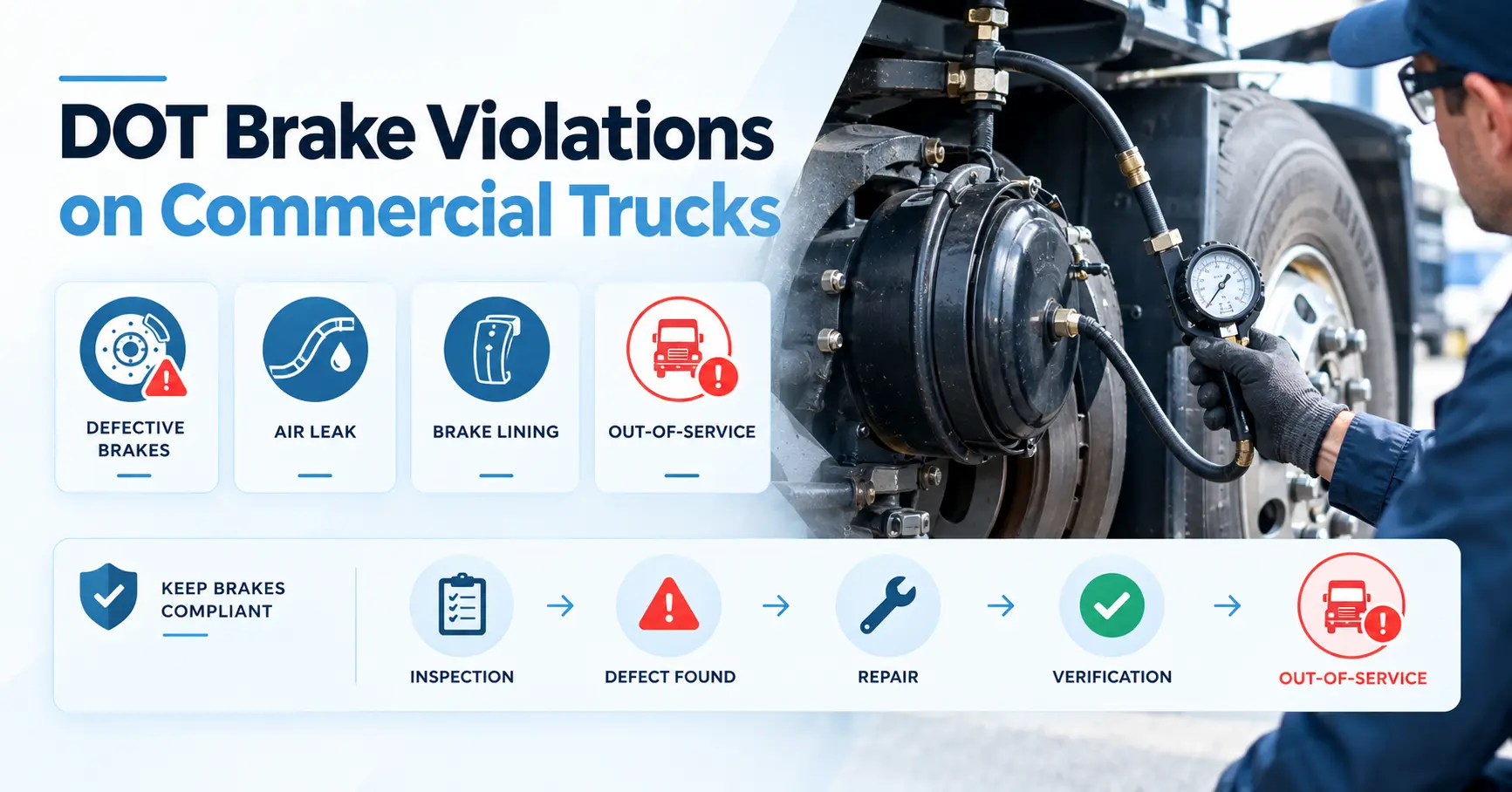
Brake condition is one of the most important safety considerations during a commercial vehicle inspection. DOT brake violations can involve brake adjustment, damaged or missing components, air-brake system problems, or other conditions that can affect a truck’s ability to stop safely.
For carriers, regular brake inspections and preventive maintenance can help identify problems before they result in roadside violations or an out-of-service condition.
What Are DOT Brake Violations?
DOT brake violations are inspection findings involving a commercial vehicle’s braking system that does not meet applicable federal safety requirements or is found to be in an unsafe condition.
Inspectors may evaluate areas such as:
- Brake adjustment
- Brake components
- Air-brake system condition
- Brake hoses and tubing
- Brake chambers
- Pushrods and related components
- Drums or rotors
- Brake lining or pads
- Other components affecting braking performance
The exact violation and potential consequence depend on the specific defect and applicable inspection criteria.
Common Truck Brake Violations
1. Improper Brake Adjustment
Brake adjustment is an important inspection consideration, particularly on vehicles equipped with air brakes.
An improperly adjusted brake can reduce braking effectiveness and may indicate a maintenance problem.
Carriers should have appropriate inspection and maintenance procedures to identify brake-adjustment issues before the vehicle is dispatched.
2. Damaged or Defective Brake Components
Brake components can deteriorate through normal use, corrosion, damage, or inadequate maintenance.
Examples of problems that may require attention include:
- Damaged brake components
- Missing hardware
- Cracked or otherwise defective components
- Loose components
- Improperly secured parts
Any condition that could affect braking performance should be evaluated promptly.
3. Brake Hose and Tubing Problems
Air-brake systems rely on hoses and tubing to maintain proper air pressure.
Inspectors may identify problems such as:
- Damaged hoses
- Improperly secured lines
- Air leaks
- Chafing
- Deterioration
- Improper routing
A brake-system air leak or damaged line should be investigated before the vehicle continues normal operation.
4. Brake Chamber and Pushrod Problems
Brake chambers and pushrods are important components of an air-brake system.
Problems involving these components can affect brake application and adjustment. Maintenance personnel should evaluate questionable components and correct defects according to applicable requirements.
5. Worn Brake Linings or Pads
Brake linings and pads gradually wear during normal operation.
Excessive wear, damage, contamination, or other defects can reduce braking effectiveness and create an inspection concern.
Routine maintenance should include appropriate monitoring of brake wear so components can be serviced before they reach an unsafe condition.
When Can Brake Problems Create Out-of-Service Risk?
Not every brake defect automatically places a commercial vehicle out of service.
The potential consequence depends on the specific defect, its severity, the affected component, and applicable out-of-service criteria.
A serious brake-system condition can create an out-of-service situation when it meets the applicable enforcement criteria.
For this reason, carriers should not assume that every brake defect has the same inspection consequence.
What Do Inspectors Look for During a Brake Inspection?
A brake inspection may involve evaluating the condition and operation of applicable braking-system components.
Depending on the vehicle and inspection circumstances, areas of concern can include:
- Brake adjustment
- Brake-system components
- Air hoses and tubing
- Brake chambers
- Pushrods
- Brake linings or pads
- Drums or rotors
- Air pressure and leakage
- Overall brake-system condition
The inspection requirements can vary depending on the vehicle configuration and braking system.
How to Prevent DOT Brake Violations
Perform Regular Brake Inspections
Brake condition should be included in the carrier’s preventive maintenance program.
Inspections should identify developing problems rather than waiting until a roadside inspection discovers them.
Monitor Brake Adjustment
Where applicable, brake adjustment should be checked using appropriate inspection and maintenance procedures.
Drivers and maintenance personnel should understand how brake-related defects are identified and reported.
Check Air-Brake Components
Air-brake systems should be checked for leaks, damage, deterioration, and other conditions that could affect performance.
Monitor Brake Wear
Track the condition of brake linings, pads, drums, rotors, and related components according to the carrier’s maintenance program.
Repair Defects Promptly
A brake defect should be evaluated and corrected before the vehicle returns to normal operation when the condition affects safe operation.
Document Maintenance
Maintain appropriate records showing inspections, repairs, replacements, and other maintenance activities.
Documentation can help the carrier demonstrate that identified brake problems were addressed.
Driver Brake Checks Before Dispatch
Drivers are an important part of the carrier’s brake-defect detection process.
Before operating the vehicle, drivers should follow the carrier’s inspection procedures and look for obvious signs of brake-system problems.
Depending on the vehicle and applicable requirements, drivers may need to pay attention to:
- Brake-system warning signs
- Air pressure issues
- Unusual brake response
- Visible damaged components
- Air leaks
- Other conditions affecting safe braking
Drivers should report identified defects through the carrier’s established maintenance process.
Brake Violations and Preventive Maintenance
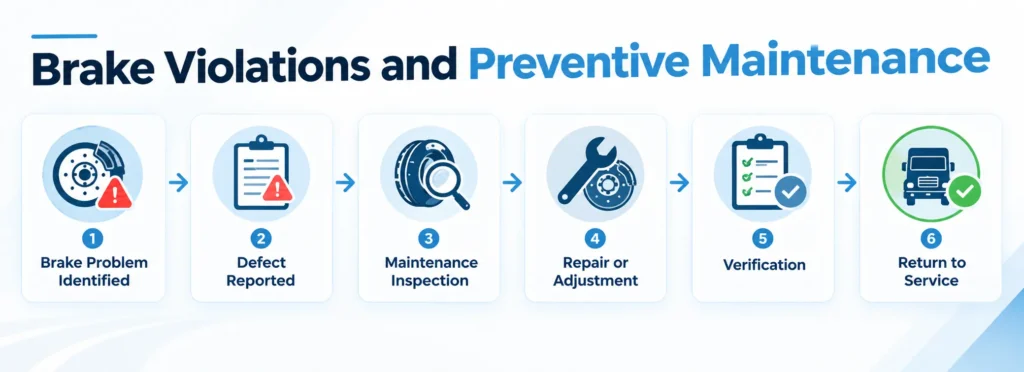
Recurring brake violations can indicate a maintenance-system problem rather than a single defective component.
For example:
Brake problem identified → Defect reported → Maintenance inspection → Repair or adjustment → Verification → Return to service
If similar brake problems repeatedly appear on the same vehicle or across the fleet, the carrier should review its preventive maintenance procedures and inspection frequency.
What Should a Carrier Do After a Brake Violation?
If a brake violation is identified:
- Review the exact defect.
- Determine whether the vehicle can legally continue operating.
- Have the brake system evaluated by qualified maintenance personnel.
- Correct the identified condition.
- Document the repair or adjustment.
- Verify the vehicle before returning it to normal operation.
- Review whether similar vehicles have the same problem.
If the vehicle has been placed out of service, the carrier should follow the applicable requirements before returning the vehicle to service.
Brake Compliance Checklist
Before dispatch, carriers can use this basic checklist:
- Brake system inspected
- Brake adjustment checked where applicable
- No obvious damaged brake components
- Brake hoses and tubing checked
- No unresolved air leaks
- Brake chambers and related components checked
- Brake linings or pads monitored
- Identified defects reported
- Required repairs completed
- Maintenance records updated
- Vehicle verified before dispatch
Conclusion
Brake problems can quickly become roadside violations, vehicle downtime, and serious compliance concerns for carriers.
If your fleet needs help staying ahead of brake inspections, maintenance issues, and DOT requirements, SafeRoad Compliance can help you build a more organized compliance process.
Contact SafeRoad Compliance for best DOT compliance service and keep your fleet prepared for inspections and safe for the road.
Don’t Let Compliance
Slow Your Business Down.
Stay organized, keep required records current, and stay ahead of important DOT compliance requirements with professional support.
Frequently Asked Questions
Common brake violations can involve improper brake adjustment, damaged components, air-brake system problems, brake hose or tubing defects, and excessive wear or damage to brake linings and pads.
A serious brake defect can result in an out-of-service condition when it meets the applicable out-of-service criteria. The outcome depends on the specific defect, its severity, and the affected brake component.
Depending on the vehicle and inspection circumstances, inspectors may examine brake adjustment, air hoses and tubing, brake chambers, pushrods, brake linings or pads, drums or rotors, air pressure, leakage, and other braking-system components.
Carriers can reduce brake violations through regular inspections, preventive maintenance, brake-adjustment checks where applicable, monitoring brake wear, prompt repairs, and accurate maintenance documentation.
Yes. Excessive wear, damage, contamination, or other defects involving brake linings or pads can create an inspection concern and may require corrective maintenance.
Brake inspections should be incorporated into the carrier’s required inspection and preventive maintenance program. The appropriate inspection frequency depends on the vehicle, operation, mileage, and maintenance requirements.
The driver should follow the carrier’s defect-reporting procedure and report the problem promptly. A qualified person should evaluate the condition and determine whether repair is required before the vehicle continues operating.
Certain brake-related inspection violations may affect a carrier’s safety performance data depending on the specific violation and applicable FMCSA reporting and SMS methodology. Recurring brake violations should therefore be treated as a fleet maintenance concern.
The carrier should review the exact defect, determine whether the vehicle can continue operating, correct the problem, document the repair or adjustment, and verify the vehicle before returning it to normal operation.