Disclosure: Informational only. We are not FMCSA or USDOT. Always verify your status directly through official FMCSA systems.
Commercial motor carriers are responsible for keeping vehicles in safe operating condition and completing required inspections. One of the most important requirements is the DOT annual vehicle inspection, also called a periodic inspection.
The annual inspection is different from a driver’s daily pre-trip inspection, a post-trip inspection or a roadside inspection. Each serves a different purpose within a carrier’s vehicle safety and maintenance program.
Understanding these inspection types helps carriers know what must be completed, how often it must occur, and what records should be maintained.
What Is a DOT Annual Vehicle Inspection?
A DOT annual vehicle inspection is a periodic inspection of a commercial motor vehicle to determine whether the vehicle meets applicable federal safety requirements.
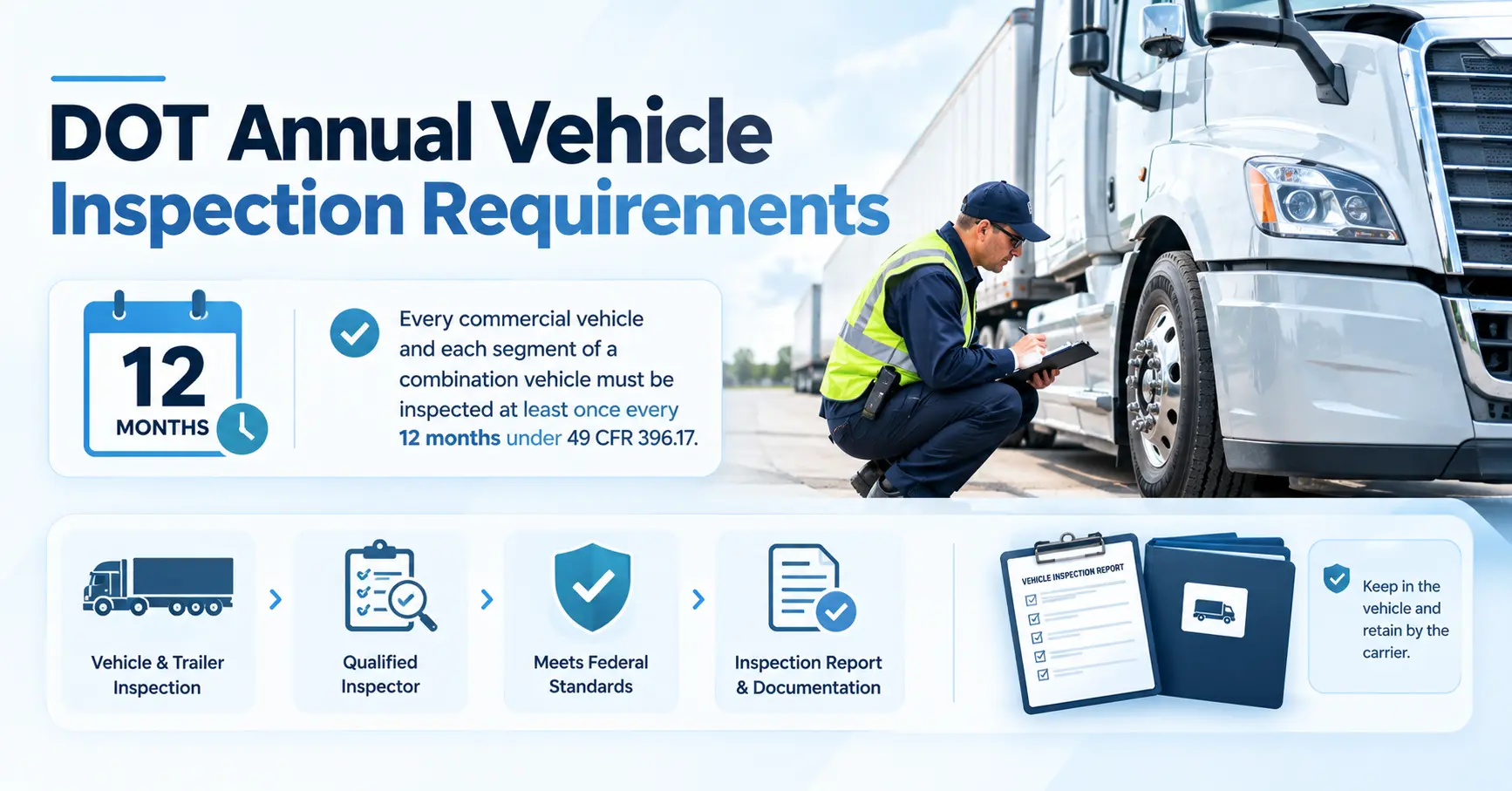
Under 49 CFR §396.17, commercial motor vehicles subject to the regulation must be inspected at least once every 12 months.
The inspection must be performed by a qualified inspector and cover the components identified in the applicable federal inspection standards.
The purpose is to identify safety-related defects and determine whether the vehicle is in acceptable condition for continued operation.
How Often Is a DOT Annual Inspection Required?
The inspection must generally be completed at least once every 12 months.
A carrier should not wait until the last few days before the inspection expires. Maintaining a tracking system for inspection due dates helps prevent an expired inspection from being overlooked.
For fleets with multiple vehicles, each unit should have its own inspection record and expiration date.
Annual Inspection Tracking Should Include:
- Vehicle identification
- Inspection date
- Inspection expiration or due date
- Inspector information
- Inspection report
- Identified defects or deficiencies
- Corrective action, when applicable
- Proof that the inspection requirement was satisfied
What Does the Annual Vehicle Inspection Cover?
The inspection must address the vehicle components specified by the applicable federal requirements.
Depending on the vehicle and equipment, inspection areas can include:
- Brake system
- Steering components
- Suspension
- Wheels and rims
- Tires
- Lighting devices
- Coupling devices
- Windshield and wipers
- Emergency equipment
- Frame
- Fuel system
- Exhaust system
- Other applicable safety components
The exact inspection scope can depend on the type of commercial motor vehicle and equipment being inspected.
A carrier should also address defects identified during the inspection before the vehicle is placed back into service when the defect affects safe operation.
Who Can Perform a DOT Annual Inspection?
The inspection must be performed by a person who meets the qualification requirements established under 49 CFR §396.19.
A carrier should verify that the inspector is qualified before relying on the inspection for compliance purposes.
The inspector must be familiar with the applicable inspection criteria and be capable of identifying safety-related defects in the components being inspected.
Carriers should retain documentation demonstrating that the required inspection was completed by a qualified inspector.
What Happens After the Inspection?
If the vehicle passes the required inspection, the carrier should maintain the inspection documentation and ensure the inspection status remains current.
If defects are identified, the carrier should address them according to the applicable maintenance and safety requirements.
A good compliance process follows this basic sequence:
Inspection completed → Defect identified → Repair or correction → Verification → Documentation → Vehicle returned to service
The important point is that the annual inspection should be part of the carrier’s broader preventive maintenance system rather than treated as a once-a-year paperwork exercise.
Annual Inspection vs. Pre-Trip Inspection
A DOT annual inspection and a pre-trip inspection are not the same requirement.
A pre-trip inspection is performed by the driver before operating the vehicle to identify conditions that could affect safe operation.
The annual inspection is a more comprehensive periodic inspection performed by a qualified inspector.
| Inspection Type | Primary Purpose | Typical Timing |
|---|---|---|
| Annual/Periodic Inspection | Verify the vehicle meets applicable safety requirements | At least every 12 months |
| Pre-Trip Inspection | Identify safety defects before operation | Before driving |
| Post-Trip/DVIR Process | Report applicable defects found during or after operation | As required |
| Roadside Inspection | Enforcement inspection conducted by officials | During roadside enforcement |
These inspections work together. Completing an annual inspection does not eliminate the driver’s responsibility to perform required daily inspections.
Annual Inspection vs. Post-Trip Inspection and DVIR
A post-trip inspection and Driver Vehicle Inspection Report (DVIR) process serves a different purpose from the annual inspection.
Drivers may be required to report defects or deficiencies discovered during vehicle operation. The carrier then needs a process for reviewing reported defects and determining whether corrective action is necessary.
This creates an ongoing feedback loop between drivers and maintenance personnel.
The annual inspection provides a periodic compliance checkpoint, while daily inspection and defect-reporting processes help identify problems throughout the year.
For a broader explanation of daily inspection and DVIR requirements, see our guide to vehicle inspection and DVIR requirements.
Annual Inspection vs. Roadside Inspection
A roadside inspection is conducted by enforcement personnel during or in connection with a commercial motor vehicle operation.
Unlike the scheduled annual inspection, a roadside inspection is not something a carrier simply books once a year.
Inspectors may examine the vehicle and driver during roadside enforcement activities and identify violations that require corrective action or, in serious circumstances, may result in an out-of-service condition.
This is why passing an annual inspection does not guarantee that a vehicle will pass every future roadside inspection.
Vehicle condition can change between inspections.
See Our Road Side Inspection Checklist for more information.
What Records Should Carriers Keep?
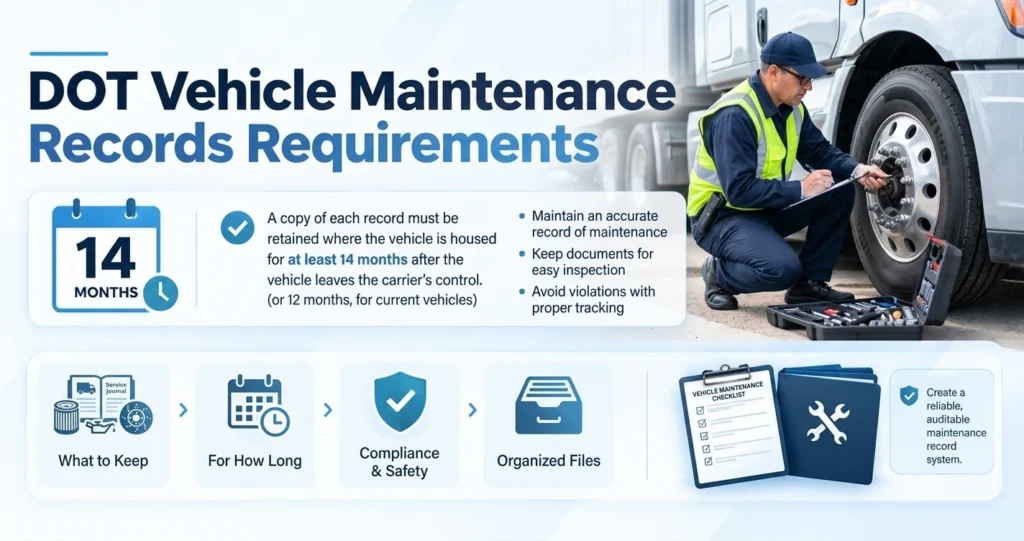
Carriers should maintain documentation showing that each applicable vehicle has received its required periodic inspection.
Records should be organized so that the carrier can quickly determine:
- Which vehicles have current inspections
- When each inspection was completed
- When the next inspection is due
- Who performed the inspection
- What defects were identified
- What corrective actions were completed
A centralized compliance system can make it easier to monitor inspection dates across a growing fleet.
Carriers should also maintain their broader vehicle maintenance and inspection records according to applicable recordkeeping requirements.
What If a Vehicle Fails the Annual Inspection?
If an inspection identifies a safety-related defect, the carrier should address the problem before the vehicle is operated when the condition makes the vehicle unsafe or otherwise prevents lawful operation.
The appropriate response depends on the defect.
A practical process is:
- Review the inspection report.
- Identify each defect or deficiency.
- Remove the vehicle from service when required.
- Complete the necessary repair or adjustment.
- Verify that the repair corrected the problem.
- Document the corrective action.
- Return the vehicle to service when appropriate.
Recurring defects should also be reviewed to determine whether the carrier has a larger maintenance problem.
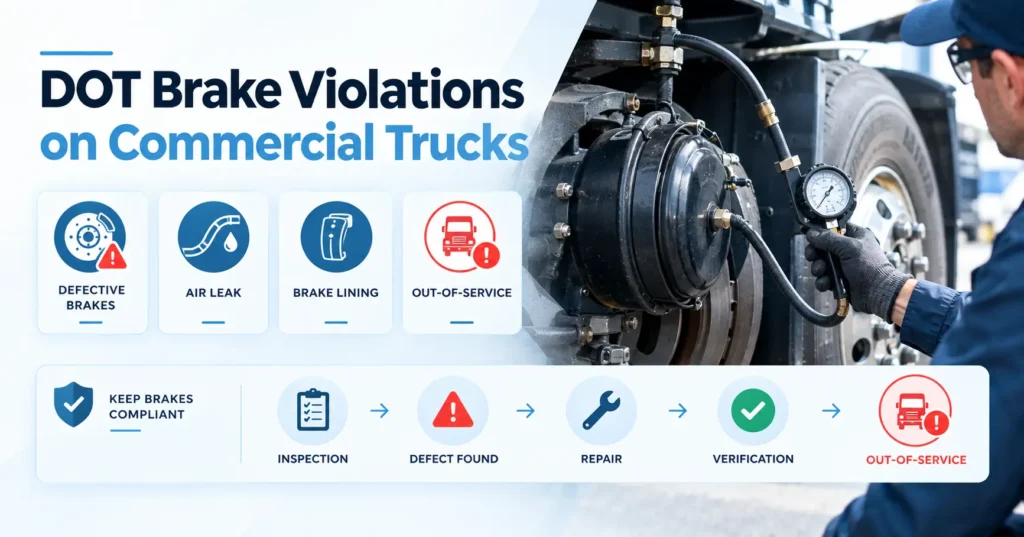
For more information on recurring maintenance-related compliance issues, see our guide to DOT vehicle maintenance violations.
How Carriers Can Prevent Annual Inspection Problems
Annual inspections are easier to manage when they are supported by year-round maintenance practices.
1. Track Inspection Due Dates
Maintain a centralized list of every applicable vehicle and its annual inspection date.
Set reminders well before expiration so scheduling does not become an emergency.
2. Monitor Daily Vehicle Condition
Drivers should report safety-related defects promptly rather than waiting for the next annual inspection.
Daily inspections can identify developing problems with tires, brakes, lights, steering and other components.
3. Repair Defects Promptly
A defect reported by a driver should enter a documented maintenance process.
Do not allow recurring defects to remain unresolved simply because the vehicle is still operating.
4. Keep Inspection Records Organized
Inspection reports should be easy to retrieve when needed.
Organized records can also help maintenance personnel identify recurring problems across individual vehicles or the fleet.
5. Review Recurring Defects
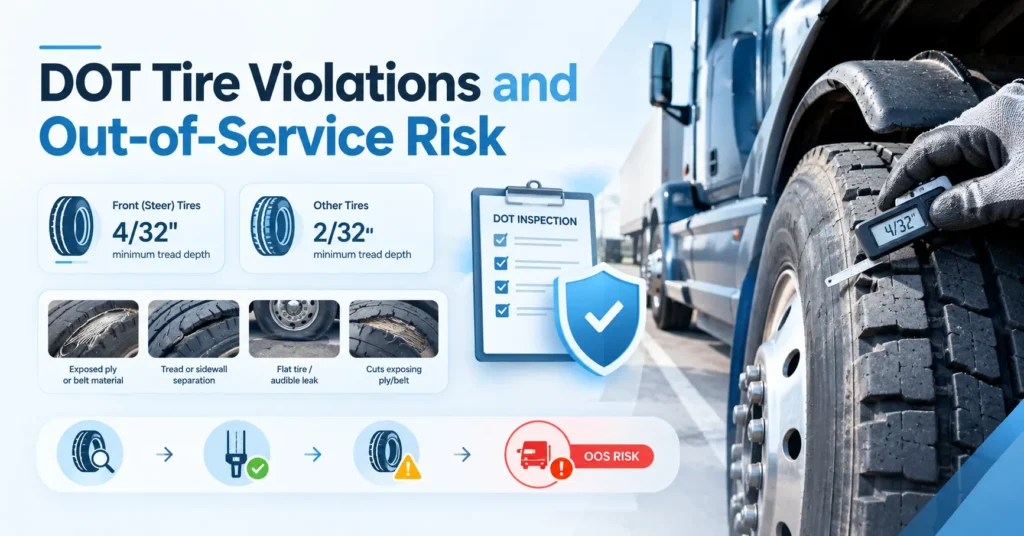
Repeated brake, tire, lighting or suspension problems may indicate that preventive maintenance intervals or repair practices need improvement.
The annual inspection should therefore be treated as one part of a continuous maintenance program.
DOT Annual Vehicle Inspection Checklist
Carriers can use this simple checklist to manage their annual inspection process:
- Identify all vehicles subject to the periodic inspection requirement.
- Track the annual inspection date for each vehicle.
- Schedule inspections before the current inspection period expires.
- Confirm the inspector meets applicable qualification requirements.
- Review the inspection report.
- Correct identified safety defects.
- Document completed repairs or corrective actions.
- Maintain inspection records.
- Update the fleet’s inspection tracking system.
- Review recurring defects for preventive maintenance issues.
Conclusion
The DOT annual vehicle inspection is a required periodic inspection that helps confirm a commercial vehicle remains in safe operating condition. It is different from pre-trip inspections, DVIR processes, and roadside inspections, which serve separate purposes.
Carriers should track inspection due dates, use qualified inspectors, correct identified defects, and maintain organized records throughout the year.
If you need help keeping your fleet’s inspection and maintenance compliance organized, SafeRoad Compliance provides DOT compliance service to help carriers stay inspection-ready and manage ongoing compliance requirements.
Don’t Let Compliance
Slow Your Business Down.
Stay organized, keep required records current, and stay ahead of important DOT compliance requirements with professional support.
FAQs
A DOT periodic inspection is generally required at least once every 12 months for applicable commercial motor vehicles.
It is a periodic inspection used to determine whether a commercial motor vehicle meets applicable federal safety requirements.
The inspection must be performed by a qualified inspector who meets the applicable requirements under 49 CFR §396.19.
The inspection covers applicable vehicle safety components, which can include brakes, steering, suspension, tires, wheels, lighting, coupling devices, emergency equipment, and other required components.
No. A pre-trip inspection is performed by the driver before operating the vehicle, while the annual inspection is a periodic inspection performed by a qualified inspector.
No. An annual inspection is a scheduled periodic inspection. A roadside inspection is an enforcement inspection that can occur while a commercial vehicle is operating.
The identified defects should be reviewed and corrected as required. If a defect makes the vehicle unsafe or otherwise prevents lawful operation, the vehicle should not be operated until the issue is properly addressed.
Carriers should maintain documentation showing that required inspections were completed, including the inspection date, vehicle information, inspector information, inspection results, and applicable corrective actions.