Disclosure: Informational only. We are not FMCSA or USDOT. Always verify your status directly through official FMCSA systems.
Tire condition is an important part of commercial vehicle safety and roadside inspection compliance. DOT tire violations can result from problems such as inadequate tread, exposed fabric, damaged tires, improper inflation, or other conditions that make a tire unsafe for operation.
For carriers, regular tire inspections and timely maintenance can help identify defects before they become roadside violations or contribute to an out-of-service condition.
What Are DOT Tire Violations?
DOT tire violations are inspection or compliance findings involving tires that do not meet applicable federal safety requirements or are in an unsafe condition.
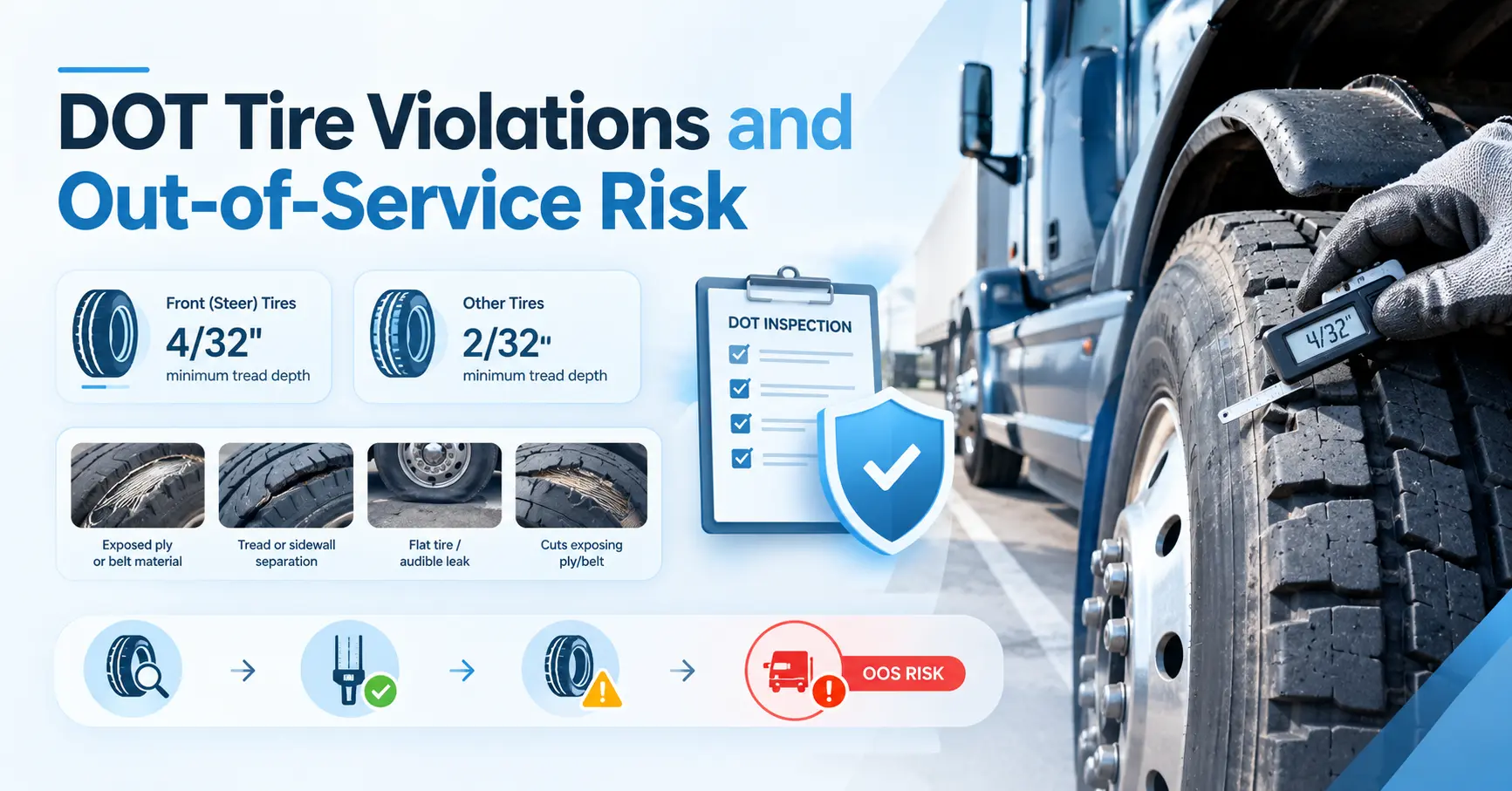
Common areas inspectors may evaluate include:
- Tire tread depth
- Tire damage
- Exposed fabric or cord
- Cuts, cracks, or other significant deterioration
- Proper tire inflation
- Tire placement and condition
- Recapped or retreaded tire condition where applicable
- Tire condition on steering axles
- Tire condition on other regulated vehicle positions
The seriousness of a tire violation depends on the specific defect and the applicable inspection criteria. For other equipment-related inspection issues beyond tires, see our guide to parts and accessories violations.
Common Truck Tire Violations
1. Insufficient Tread Depth
Tread depth is one of the most important tire inspection measurements.
Commercial motor vehicles must meet applicable minimum tread-depth requirements. A tire with insufficient tread can create a violation and may increase the risk of poor traction, particularly in wet conditions.
Carriers should measure tread rather than relying only on visual inspection.
2. Exposed Fabric or Cord
A tire with exposed fabric, belt material, or cord can indicate serious tire deterioration.
This type of damage should be addressed promptly because the tire’s structural integrity may be compromised.
3. Tire Cuts, Cracks, or Damage
Visible cuts, cracks, bulges, or other significant damage can create safety concerns.
Drivers should report questionable tire conditions before operating the vehicle, while maintenance personnel should determine whether the tire can remain in service.
4. Improper Tire Inflation
Underinflation or other inflation problems can affect tire performance, heat buildup, handling, and tire wear.
Tire pressure should be checked using appropriate equipment and according to the carrier’s maintenance procedures and tire manufacturer’s requirements.
5. Steering-Axle Tire Problems
Tires installed on steering axles receive particular attention because tire condition can directly affect vehicle steering and control.
Carriers should establish inspection procedures that specifically identify defects on steering-axle tires before dispatch.
When Can a Tire Violation Create Out-of-Service Risk?
Not every tire defect automatically places a vehicle out of service.
The potential consequence depends on the specific defect, location, severity, and applicable inspection criteria.
A serious tire condition can result in an out-of-service finding when the defect meets the applicable federal out-of-service criteria.
This is why carriers should not treat every tire issue as either “safe” or “out of service” without evaluating the actual condition.
“Tire defects are only one category of conditions that can create out-of-service risk. For a broader explanation, see our guide to DOT out-of-service violations.”
Tire Inspection Points Drivers Should Check
Tires should be reviewed as part of the carrier’s overall inspection process. For a broader vehicle-preparation checklist, see our DOT roadside inspection checklist.
A practical pre-trip tire inspection should look for obvious conditions such as:
- Low or visibly abnormal inflation
- Damaged sidewalls
- Cuts or cracks
- Bulges
- Exposed cord or fabric
- Abnormal tread wear
- Missing tread sections
- Objects embedded in the tire
- Tire contact with another component
- Improperly positioned or damaged tires
- Other conditions that could affect safe operation
Drivers should follow the carrier’s inspection procedures and report defects through the established maintenance process.
DOT Tire Violations vs. Normal Tire Wear
Not every worn tire is automatically a DOT violation.
Normal wear should be evaluated against the applicable minimum requirements and the overall condition of the tire.
The key question is not simply:
“Does the tire look worn?”
It is:
“Does the tire meet the applicable safety requirements and remain safe for operation?”
Carriers should use appropriate measurements and maintenance procedures rather than relying solely on appearance.
How Tire Problems Become Recurring Compliance Issues
A single tire defect may be a maintenance issue. Repeated tire violations can indicate a larger maintenance-control problem.
For example:
If the same type of defect continues to appear, the carrier should examine whether inspections, maintenance intervals, driver reporting, or corrective-action procedures need improvement.
How to Prevent DOT Tire Violations
Perform Consistent Tire Inspections
Tires should be checked as part of the carrier’s established inspection and maintenance process.
Drivers should know what conditions require immediate reporting.
Measure Tread Depth
Do not rely only on visual inspection. Use an appropriate tread-depth measurement method when determining whether a tire meets the applicable minimum requirement.
Monitor Tire Pressure
Regular pressure checks can help identify underinflation and reduce preventable tire problems.
Address Defects Promptly
A tire identified as damaged or unsafe should not simply be placed back into service without appropriate evaluation.
Document Maintenance
Keep appropriate maintenance and repair records so the carrier can demonstrate that identified defects were addressed.
Review Repeat Problems
If a vehicle repeatedly develops tire-related issues, review its maintenance history rather than treating each occurrence as an isolated event.
Tire Violations and Roadside Inspections
During a roadside inspection, an inspector may identify tire defects as part of the vehicle inspection.
A carrier should therefore think beyond passing a single inspection. The goal should be maintaining tires in a condition that supports safe operation every day.
Regular inspection, preventive maintenance, and prompt defect correction reduce the likelihood that a tire problem will become a roadside violation.
What Should a Carrier Do After a Tire Violation?
If a tire violation is identified, the carrier should:
- Review the exact defect identified.
- Determine whether the vehicle is permitted to continue operating.
- Correct the tire condition as required.
- Document the maintenance or repair.
- Verify the tire before returning the vehicle to normal operation.
- Review whether similar tires or vehicles have the same problem.
If the vehicle was placed out of service, the carrier should follow the applicable procedures for correcting the condition and returning the vehicle to service.
Quick Tire Compliance Checklist
Before dispatch, carriers can use this basic checklist:
- Tires are properly inflated
- Tread condition is acceptable
- No exposed cord or fabric
- No significant cuts, cracks, or bulges
- No unsafe tire damage
- Steering-axle tires are in proper condition
- Tire defects have been reported
- Required repairs have been completed
- Maintenance records are updated
- Vehicle is verified before dispatch
Conclusion
Regular tire inspections and preventive maintenance can help carriers identify DOT tire violations before they become roadside or out-of-service problems.
If you need help reviewing and maintaining your carrier’s compliance requirements, SafeRoad Compliance can help.
Get professional DOT compliance service to keep your fleet organized, inspection-ready, and focused on safe operations.
Don’t Let Compliance
Slow Your Business Down.
Stay organized, keep required records current, and stay ahead of important DOT compliance requirements with professional support.