Disclosure: Informational only. We are not FMCSA or USDOT. Always verify your status directly through official FMCSA systems.
If you’re considering a career in trucking, one of the biggest decisions you’ll face is whether to become an owner operator or company driver.
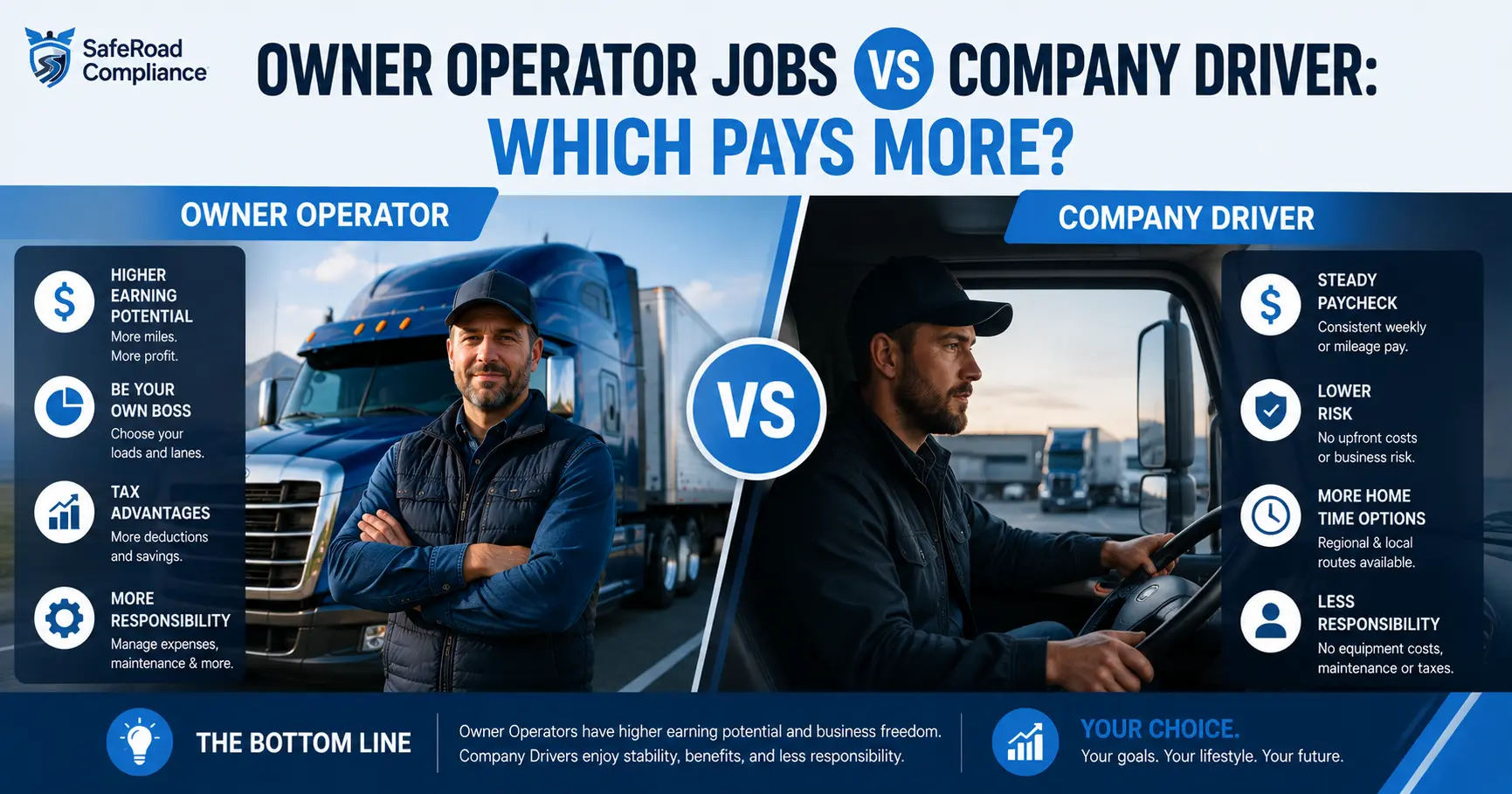
Both paths can provide a strong income, but they work very differently. Company drivers typically receive a more predictable paycheck with fewer business expenses, while owner operators have greater control over their operations and may have higher earning potential.
So, which pays more: an owner operator or a company driver?
The answer depends on how you look at income, expenses, taxes, risk, and business responsibilities.
For drivers considering an owner operator career, understanding these differences can help you decide which path fits your goals.
Owner Operator vs Company Driver: What’s the Difference?
A company driver works for a trucking company and generally operates equipment owned or provided by the employer. The company typically handles major business expenses associated with the truck.
An owner operator owns or controls their own truck and operates as an independent transportation professional. Depending on the arrangement, an owner operator may work with carriers to access freight and trucking opportunities.
The biggest difference is simple:
Company drivers are primarily paid for driving, while owner operators are running a trucking business in addition to driving.
That business ownership creates additional responsibilities but can also provide more control over how you operate.
Owner Operator Salary vs Company Driver Pay
Company driver pay is generally easier to understand because the driver is paid according to an established compensation structure.
Depending on the employer and position, company driver compensation may include:
- Pay per mile
- Hourly pay
- Percentage-based compensation
- Detention or layover pay
- Bonuses
- Other company-specific incentives
Owner operator income can be structured differently.
An owner operator may earn revenue based on:
- Percentage of load revenue
- Rate per mile
- Individual load rates
- Contract arrangements
- Other carrier-specific compensation structures
Because owner operators are responsible for many operating expenses, gross revenue should not be confused with personal income.
An owner operator may generate more revenue than a company driver but also have substantially more expenses.
Owner Operator Income: Don’t Look at Gross Revenue Alone
One of the biggest mistakes people make when comparing an owner operator with a company driver is looking only at the top-line number.
An owner operator may be responsible for expenses such as:
- Truck payments
- Commercial insurance
- Fuel
- Maintenance
- Repairs
- Tires
- Registration and permits
- Tolls
- Accounting and business expenses
- Compliance-related costs
These expenses can significantly affect the amount an owner operator ultimately keeps.
For this reason, the better question isn’t simply:
“How much does an owner operator make?”
Instead, ask:
“How much can I reasonably keep after operating my trucking business?”
Company Driver Pay: More Predictability
Company driving can be attractive to people who prefer predictable employment and fewer business responsibilities.
A company driver generally doesn’t have to directly manage many of the major costs associated with owning and operating a truck.
Depending on the employer, the company may handle responsibilities involving:
- Truck maintenance
- Vehicle repairs
- Fuel
- Registration
- Insurance
- Dispatch
- Compliance administration
The exact arrangement varies by employer, but this structure can make financial planning easier.
For someone who wants to focus primarily on driving rather than running a trucking business, becoming a company driver may be the better fit.
Owner Operator: Higher Potential, More Responsibility
One reason drivers consider becoming owner operators is the potential for greater income and independence.
As an owner operator, you have greater involvement in decisions about your business and how you operate.
You may have more control over:
- Equipment
- Routes
- Operating preferences
- Carrier relationships
- Business decisions
- Growth opportunities
However, that freedom comes with responsibility.
You’re not simply driving a truck. You’re managing a business.
That means understanding revenue, expenses, documentation, compliance, maintenance, and operational requirements.
Taxes: Owner Operator vs Company Driver
Taxes can also work differently.
Company drivers are generally employees whose payroll taxes and other employment-related deductions are handled through their employer’s payroll system.
Owner operators operate a business and are responsible for managing their business tax obligations.
That can mean maintaining accurate financial records and working with qualified tax professionals to understand applicable deductions and filing requirements.
Because tax situations vary significantly, owner operators should consider professional tax advice based on their individual business circumstances.
Freedom and Flexibility
Another major difference between an owner operator and company driver is independence.
Company Driver
A company driver generally works within the carrier’s established system.
The company may determine:
- Available freight
- Dispatch procedures
- Routes
- Equipment
- Scheduling expectations
This can provide structure and reduce the number of business decisions the driver has to make.
Owner Operator
Owner operators generally have more control over their business decisions.
Depending on their arrangement, they may have more flexibility regarding:
- Operating areas
- Equipment
- Carrier opportunities
- Business growth
- Scheduling preferences
However, more freedom also means more responsibility for the results.
Owner Operator vs Company Driver: Pros and Cons
Owner Operator Advantages
Owner operators may benefit from:
- Greater business independence
- Higher earning potential
- More control over operations
- Opportunity to build a trucking business
- Greater involvement in business decisions
Owner Operator Challenges
The trade-offs can include:
- Higher operating expenses
- Greater financial risk
- Truck maintenance responsibilities
- Insurance costs
- Compliance responsibilities
- Business administration
- Variable income
Company Driver Advantages
Company drivers may benefit from:
- More predictable compensation
- Fewer business expenses
- Less administrative responsibility
- Employer-provided equipment
- Less financial risk related to truck ownership
Company Driver Challenges
Potential disadvantages can include:
- Less control over operations
- Less flexibility
- Company-set policies
- Limited control over equipment
- Lower business ownership potential
Which Is Better for You?
There isn’t one answer that works for every driver.
A company driver position may make more sense if you:
- Want predictable income
- Don’t want to purchase or manage a truck
- Prefer fewer business responsibilities
- Want to focus primarily on driving
An owner operator opportunity may be a better fit if you:
- Want to operate your own truck
- Are comfortable managing a business
- Want more independence
- Understand trucking expenses
- Want to pursue greater earning potential
- Are prepared for additional compliance and administrative responsibilities
The important thing is to evaluate the complete opportunity rather than focusing only on an advertised income figure.
Why Compliance Matters for Owner Operators
Becoming an owner operator also means taking your regulatory responsibilities seriously.
Depending on your operation, you may need to manage requirements involving your USDOT registration, operating authority, driver records, drug and alcohol compliance, and other DOT-related obligations.
SafeRoad Compliance helps transportation professionals manage these requirements through services such as USDOT Number Registration, MC Number Registration, Driver Qualification File Management, and Driver Vetting.
This can help owner operators spend less time trying to navigate administrative requirements and more time focusing on their business.
Ready to Explore Owner Operator Opportunities?
If you’ve compared owner operator income with company driver pay and decided that greater independence is right for you, the next step is finding an opportunity that fits your business.
SafeRoad Compliance provides a free online application for qualified owner operators and fleet owners.
After you apply, a SafeRoad representative can verify your information and review available carrier opportunities that may match your business profile.
Whether you operate one truck or multiple vehicles, SafeRoad can help you take the next step toward potential trucking opportunities.
Apply With SafeRoad Compliance
If you’re ready to explore owner operator opportunities, you can submit your application online.
100% free to apply.
Frequently Asked Questions
Owner operators can have higher earning potential, but higher gross revenue does not necessarily mean higher take-home income. Owner operators also have to pay business and operating expenses that company drivers generally don’t pay directly.
It can be worthwhile for drivers who want greater independence and are prepared to manage the financial, operational, and compliance responsibilities of running a trucking business.
Company driving can involve fewer business responsibilities because the carrier generally handles many operational and administrative tasks. Owner operators have more responsibility because they are also running a business.
Greater independence and control are major advantages. Owner operators may have more control over their equipment, business decisions, and carrier opportunities.
The biggest challenge is that the owner operator assumes more financial and operational responsibility. Fuel, maintenance, insurance, truck payments, and compliance requirements can all affect profitability.
Yes. SafeRoad Compliance welcomes applications from qualified independent owner operators and fleet owners. Applications are free, and qualified applicants may be contacted regarding available carrier opportunities.
Final Thoughts
The choice between an owner operator and company driver ultimately comes down to more than salary.
Company driving can provide greater predictability and fewer business responsibilities. Owner operating can provide greater independence and earning potential, but it also requires you to manage the costs and responsibilities of running a trucking business.
If you’re ready to pursue the owner operator path, SafeRoad Compliance provides a simple way to submit your information and explore potential carrier opportunities.
Take the next step toward your next trucking opportunity with SafeRoad Compliance.
Ready to Explore Owner Operator Opportunities?
Find potential carrier opportunities that match your business profile and experience. Our team reviews applications individually and connects qualified owner operators with available opportunities.