Disclosure: Informational only. We are not FMCSA or USDOT. Always verify your status directly through official FMCSA systems.
Getting operating authority is only one part of becoming ready to haul freight.
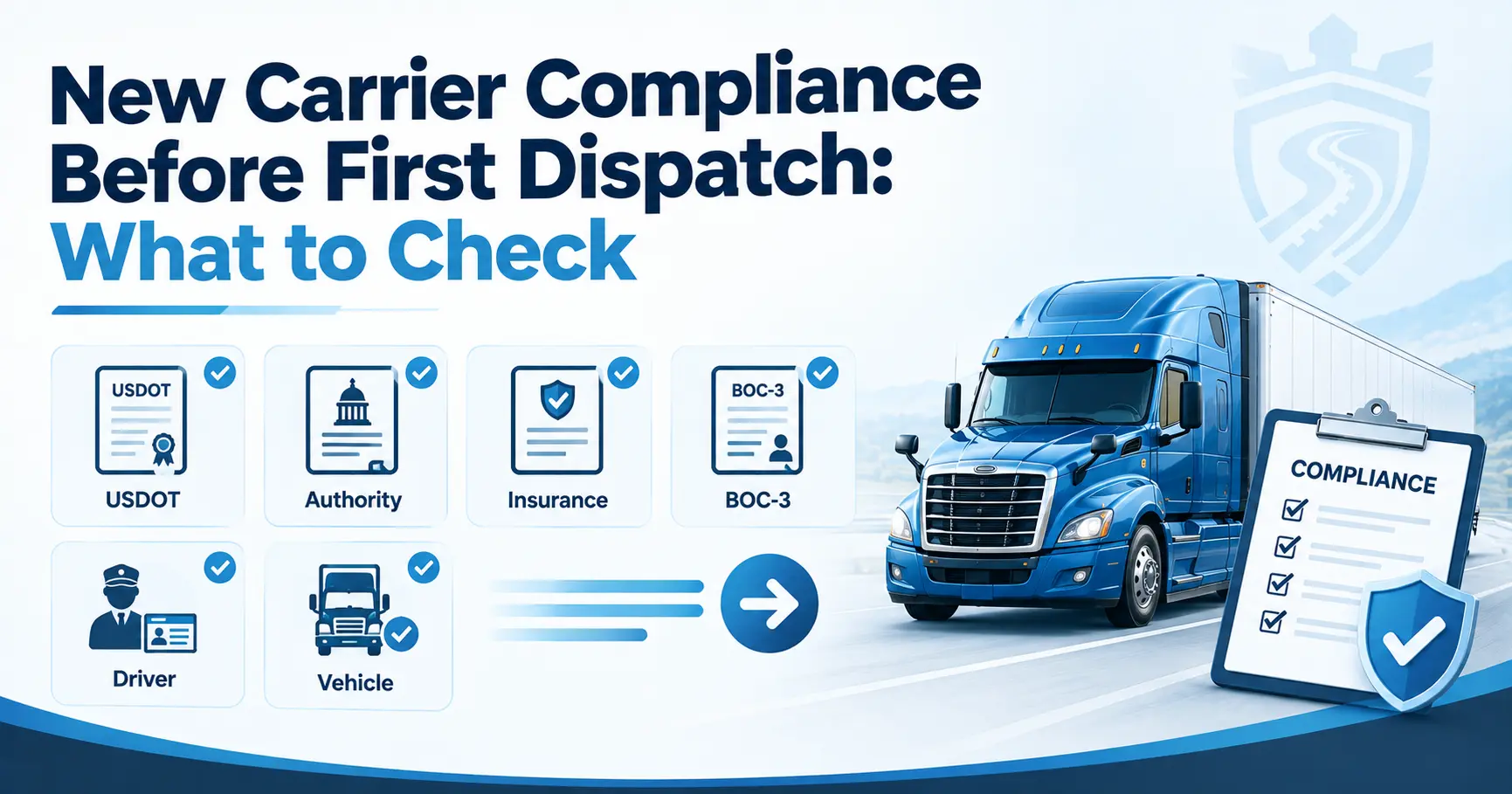
Before a new motor carrier accepts and dispatches its first load, it should verify that its authority, insurance, BOC-3, drivers, vehicles, drug and alcohol program, HOS processes, and required records are properly established.
This pre-dispatch review is important because a carrier can have an active USDOT number and operating authority while still having gaps in its day-to-day compliance system.
The practical goal is simple:
Do not dispatch the first load until the carrier can demonstrate that the company, driver, vehicle, and required compliance records are ready for operation.
What Is New Carrier Compliance Before the First Load?
New carrier compliance before the first load is the process of verifying that a newly established motor carrier has completed the regulatory and operational requirements necessary to begin commercial operations.
A carrier readiness review should generally cover:
- Operating authority
- USDOT registration
- Insurance
- BOC-3 process agent filing
- Driver qualification
- Drug and alcohol compliance
- Vehicle compliance
- Hours of Service
- ELD requirements
- Required company records
- Dispatch and trip documentation
The exact requirements depend on the carrier’s operation, vehicle type, cargo, operating authority, and other factors.
This is why a pre-dispatch compliance gate is more useful than simply checking whether the carrier’s authority shows as active.
Why New Carriers Need a Pre-Dispatch Compliance Check
A new carrier may spend considerable time completing registration and authority requirements and then move directly into finding freight.
That can create a gap between having authority and being operationally prepared.
For example, a carrier might have:
- An active operating authority
- Insurance on file
- A BOC-3 filing
but still lack:
- Complete driver qualification files
- Required drug and alcohol program enrollment
- Proper vehicle inspection records
- ELD setup
- HOS procedures
- Required company policies
- Organized compliance records
These gaps can become especially important once the carrier begins operating and enters the FMCSA’s New Entrant monitoring period.
The safest approach is to treat the first dispatch as a compliance readiness checkpoint.
New Carrier Pre-Dispatch Compliance Checklist
Before the first load, review the following areas.
| Compliance Area | What to Verify Before Dispatch |
|---|---|
| Authority | Operating authority is active and appropriate for the operation |
| USDOT | Company registration information is accurate |
| Insurance | Required insurance is active and properly filed |
| BOC-3 | Process agent filing is in place where required |
| Driver | Driver is properly qualified |
| Drug & Alcohol | Required program and testing processes are established |
| Vehicle | Vehicle inspection and maintenance requirements are addressed |
| HOS | Driver has a compliant HOS process |
| ELD | Required ELD is installed and operational |
| Records | Required compliance records are organized |
| Dispatch | Trip documentation and operational procedures are ready |
This is a readiness framework rather than a substitute for reviewing the requirements that apply to a specific operation.
1. Verify Operating Authority Before the First Load
The first question is whether the carrier is actually authorized to conduct the operation it plans to perform.
Review:
- USDOT number
- Operating authority status
- Authority type
- Authority scope
- Company information
- Applicable operating limitations
Do not rely solely on a screenshot, email, or third-party statement saying that authority has been obtained.
Verify the carrier’s current status through the appropriate FMCSA registration and authority records.
If the carrier’s authority is not active or does not cover the planned operation, the company should resolve the issue before accepting a load that requires that authority.
For a broader explanation of the authority process, see the DOT Operating Authority Application Process guide.
2. Confirm Insurance Requirements
Insurance is another critical pre-dispatch checkpoint.
The carrier should verify that the required insurance coverage is active and that the appropriate filing has been made with FMCSA when required.
Review:
- Policy status
- Effective date
- Coverage limits
- Insurer information
- FMCSA filing status
- Cancellation or expiration information
A carrier should not assume that purchasing an insurance policy automatically means the FMCSA record is complete.
The insurance filing and authority status should be reviewed together before dispatch.
3. Verify the BOC-3 Filing
A new motor carrier subject to the applicable process-agent requirement needs the appropriate BOC-3 filing before its operating authority can become effective.
The carrier should confirm that the BOC-3 has been properly filed and is reflected in the carrier’s regulatory record.
The pre-dispatch check should answer:
Is the required BOC-3 filing complete and associated with this carrier?
Do not confuse the BOC-3 with insurance or operating authority.
They are separate compliance components that should each be verified.
4. Complete Driver Qualification Before Dispatch
The carrier should not treat driver onboarding as a paperwork exercise that can be completed after the first load.
Before dispatching a driver, review the applicable driver qualification requirements and make sure the required documentation has been collected.
Depending on the driver and operation, the qualification process may involve:
- Driver application
- Motor vehicle record
- Previous-employer inquiries
- Road test or equivalent documentation
- Medical qualification documentation
- Required certifications
- Driver history
- Other applicable qualification records
The important principle is:
The driver should be qualified before the carrier places the driver into service.
A carrier should also establish a process for maintaining the driver’s qualification file after onboarding.
For a detailed process, see the New Authority Checklist and your driver qualification resources.
5. Establish the Drug and Alcohol Compliance Program
A new carrier should have its required DOT drug and alcohol compliance processes established before the first driver begins a safety-sensitive function.
Depending on the operation, this can involve:
- Pre-employment testing
- Random testing program
- Post-accident procedures
- Reasonable-suspicion procedures
- Return-to-duty processes when applicable
- Follow-up testing when applicable
- Consortium/third-party administrator arrangements
- Drug and alcohol records
The carrier should also make sure that the driver is properly enrolled in the applicable testing program.
For CDL drivers subject to FMCSA drug and alcohol testing requirements, Clearinghouse obligations should also be incorporated into the carrier’s compliance process.
The important point is that drug and alcohol compliance should be operational before the driver begins covered safety-sensitive work.
6. Verify Driver Clearinghouse Requirements
For drivers subject to FMCSA Clearinghouse requirements, the carrier should establish the required query and reporting processes.
The pre-dispatch review should confirm that applicable requirements have been addressed before the driver begins operating.
This can include:
- Required pre-employment Clearinghouse query
- Appropriate driver consent
- Query documentation
- Required follow-up procedures when applicable
- Annual query tracking system
A carrier should not wait until an audit to determine whether its Clearinghouse process is working.
The goal is to have a repeatable process for every applicable driver.
7. Make Sure the Vehicle Is Ready for Service
A qualified driver does not make an unprepared vehicle compliant.
Before dispatch, review the vehicle’s condition and required documentation.
Depending on the operation, this may include:
- Required inspection
- Maintenance records
- Inspection documentation
- Brake-related requirements
- Tires
- Lights
- Safety equipment
- Emergency equipment
- Required vehicle markings
- Registration
- Supporting vehicle records
The carrier should have a process for identifying defects and ensuring that vehicles requiring repairs are not placed into service improperly.
Vehicle compliance should continue after the first dispatch through inspections, maintenance, and defect-resolution procedures.
8. Confirm ELD Readiness
For carriers and drivers subject to the ELD requirements, the ELD should be properly installed, configured, and ready before the vehicle begins covered operations.
Review:
- ELD installation
- Driver account
- Carrier information
- Vehicle information
- Device connectivity
- Driver login process
- HOS settings
- Supporting documentation
- Malfunction procedures
The driver should also know how to use the system.
An ELD that is technically installed but not properly configured or understood by the driver does not create an effective HOS compliance process.
9. Establish a Hours-of-Service Process
Before the first dispatch, the carrier should have a practical process for managing Hours of Service.
The driver should understand how to:
- Record duty status
- Use the ELD
- Review available hours
- Manage required breaks
- Handle adverse conditions when applicable
- Document supporting information
- Respond to ELD malfunctions
The carrier should also have a process for monitoring logs and addressing violations.
HOS compliance should be part of daily operations rather than something reviewed only after a roadside inspection.
10. Organize Required Company Records
A new carrier should establish its recordkeeping system before operations begin.
The company should know:
- What records it must maintain
- Where records are stored
- Who is responsible for them
- How long they must be retained
- How records will be retrieved during an audit
Records may relate to:
- Drivers
- Vehicles
- Drug and alcohol compliance
- HOS
- Inspections
- Maintenance
- Accidents
- Registration
- Insurance
- Authority
- Company policies
The objective is to create an organized compliance system from the beginning rather than reconstructing records later.
11. Prepare the Driver for the First Dispatch
Compliance does not stop at the office.
The driver should know what documentation and procedures apply before leaving with the first load.
The carrier should make sure the driver understands:
- ELD operation
- HOS requirements
- Inspection responsibilities
- Accident procedures
- Drug and alcohol policies
- Required documents
- Defect reporting
- Company communication procedures
A new carrier’s compliance system is only effective if the driver can follow it during actual operations.
12. Review the First-Dispatch Documentation
Before the first load leaves, the carrier should be able to identify the basic information associated with the trip.
Depending on the operation, this may include:
- Driver
- Vehicle
- Dispatch information
- Load information
- Origin
- Destination
- Supporting trip documents
- HOS records
- Required shipping documents
The purpose is not to create unnecessary paperwork.
It is to ensure the carrier has a reliable operational record from the first day of business.
New Carrier Readiness Gate
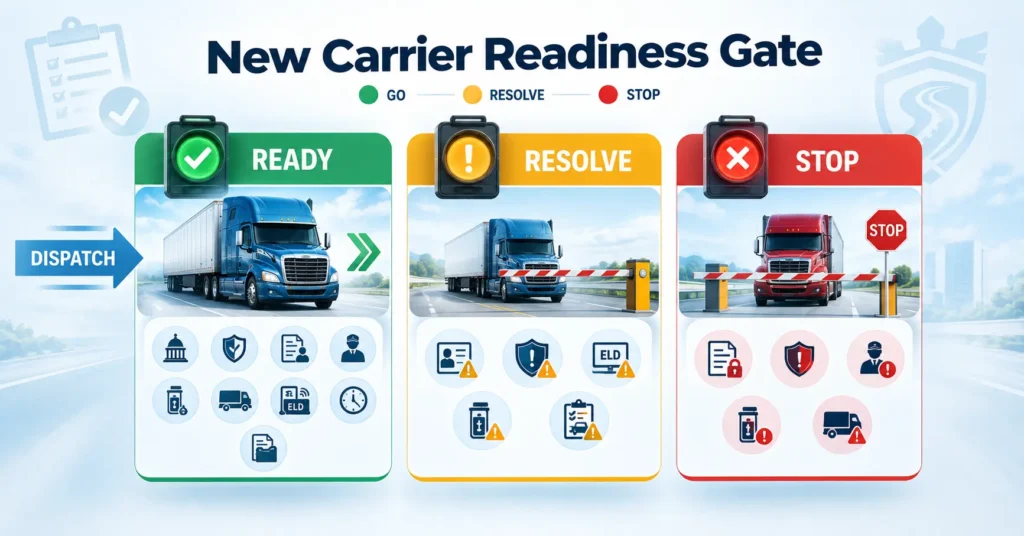
A simple way to manage the process is to create a go/no-go compliance gate.
GREEN: Ready
The carrier has verified:
- Authority
- Insurance
- BOC-3
- Driver qualification
- Drug and alcohol requirements
- Vehicle readiness
- ELD
- HOS process
- Required records
The carrier can proceed with dispatch subject to the requirements applicable to its operation.
YELLOW: Resolve Before Dispatch
A requirement is incomplete or cannot yet be verified.
Examples:
- Missing driver qualification document
- Insurance filing not confirmed
- ELD configuration issue
- Incomplete drug testing documentation
- Missing vehicle inspection record
The carrier should resolve the issue before putting the driver or vehicle into service when the requirement is necessary for lawful operation.
RED: Do Not Dispatch
A critical regulatory requirement is not satisfied.
Examples may include:
- Required authority is not active
- Required insurance is not in place
- Driver is not properly qualified
- Required drug and alcohol testing requirement has not been satisfied
- Vehicle cannot legally or safely be placed into service
The carrier should stop the dispatch process until the issue is resolved.
What New Carriers Often Miss Before Their First Load
New carriers often concentrate on obtaining authority and finding freight.
The less visible compliance tasks can receive less attention.
Common gaps include:
Authority Is Active, But Driver Qualification Is Incomplete
The company may have authority but still lack a complete driver qualification file.
Insurance Was Purchased, But Filing Was Not Verified
The carrier may assume the insurance process is complete without confirming the applicable FMCSA filing status.
BOC-3 Was Ordered, But Not Confirmed
A carrier should verify that the required filing is actually in place.
Drug Testing Is Planned, But Not Operational
Having a consortium or testing provider selected is different from having the required compliance process ready for the driver.
ELD Is Installed, But the Driver Is Not Trained
The device may be physically present while the driver does not understand log-in, duty-status, or malfunction procedures.
Records Exist, But Nobody Owns the Process
A carrier should assign responsibility for maintaining and reviewing compliance records.
New Carrier Compliance Before First Load: Final Checklist
Use this checklist as a final pre-dispatch review:
Company
- USDOT information reviewed
- Operating authority verified
- Insurance verified
- Required BOC-3 filing verified
- Company compliance responsibilities assigned
Driver
- Driver qualification requirements completed
- Medical qualification documented
- MVR and required background checks completed
- Required drug and alcohol testing completed
- Clearinghouse requirements addressed
- Driver understands company compliance procedures
Vehicle
- Vehicle properly registered
- Required inspection completed
- Maintenance process established
- Safety equipment verified
- Required markings/documentation addressed
HOS / ELD
- ELD installed when required
- ELD configured correctly
- Driver account established
- Driver trained on ELD use
- HOS procedures established
- ELD malfunction procedure available
Records
- Driver records organized
- Vehicle records organized
- Drug and alcohol records organized
- HOS records accessible
- Maintenance records established
- Accident/incident process established
- Compliance documents stored in a retrievable system
Dispatch
- Driver approved for dispatch
- Vehicle approved for dispatch
- Required trip documents available
- Compliance gate completed
- Any unresolved critical issue cleared
What Happens After the First Dispatch?
Passing the pre-dispatch checklist does not mean the carrier is finished with compliance.
The carrier is beginning an ongoing compliance process.
After the first load, the company should continue monitoring:
- Driver qualification
- Medical qualification
- Drug and alcohol compliance
- HOS
- ELD records
- Vehicle inspections
- Maintenance
- Accidents
- Required filings
- Company records
New carriers should also understand their obligations during the FMCSA New Entrant monitoring period.
A strong system from the first dispatch makes it easier to maintain compliance as the fleet grows and helps prepare the company for potential regulatory review.
For a broader explanation of the New Entrant process, see the New Entrant Safety Audit Guide.
Conclusion
New carriers should verify every key compliance requirement before the first dispatch to avoid preventable issues.
A structured readiness check helps ensure drivers, vehicles, records, and regulatory requirements are in place.
For ongoing support, SafeRoad Compliance provides a reliable DOT compliance service to help keep your operation organized and audit-ready.
FAQs
A new carrier should verify that its operating authority, required insurance, BOC-3, driver qualification, drug and alcohol requirements, vehicle, ELD when applicable, HOS process, and required compliance records are ready before dispatch.
Not necessarily. Operating authority is one part of carrier readiness. The carrier should also verify the requirements that apply to its drivers, vehicles, drug and alcohol program, HOS, ELD, records, and planned operation before dispatching.
The carrier should use a pre-dispatch checklist covering authority, insurance, BOC-3, driver qualification, drug and alcohol compliance, vehicle readiness, ELD, HOS, and required records.
A carrier subject to the applicable process-agent requirement needs the required BOC-3 filing as part of establishing operating authority. The carrier should verify that the filing is properly recorded before beginning operations.
Yes. A carrier should complete the applicable driver qualification requirements before placing a driver into service. The qualification process can include required driver, MVR, medical, and other supporting records.
If the carrier operates drivers subject to FMCSA’s DOT drug and alcohol testing requirements, the required program and applicable testing processes must be established before covered safety-sensitive work begins.
If the carrier and driver are subject to the FMCSA ELD requirements, the required ELD should be properly installed, configured, and operational before covered driving begins. Applicable exemptions should be evaluated where relevant.
The carrier should verify applicable vehicle registration, inspection, maintenance, safety equipment, required markings, and other vehicle requirements before placing the vehicle into service.
A pre-dispatch compliance gate is a final go/no-go review used to determine whether the carrier, driver, and vehicle are ready for the first load. It helps identify critical compliance gaps before operations begin.
The carrier should establish organized records for applicable areas such as driver qualification, medical qualification, drug and alcohol compliance, HOS, ELD, vehicle inspections, maintenance, insurance, authority, and company compliance documentation.
No. The first dispatch is the beginning of ongoing compliance. The carrier must continue managing driver qualification, HOS, drug and alcohol requirements, vehicle inspections and maintenance, records, filings, and other requirements applicable to its operation.
A pre-dispatch review helps the carrier identify missing or unresolved requirements before they affect actual operations. It also establishes a documented compliance process from the beginning of the carrier’s operating lifecycle.