Disclosure: Informational only. We are not FMCSA or USDOT. Always verify your status directly through official FMCSA systems.
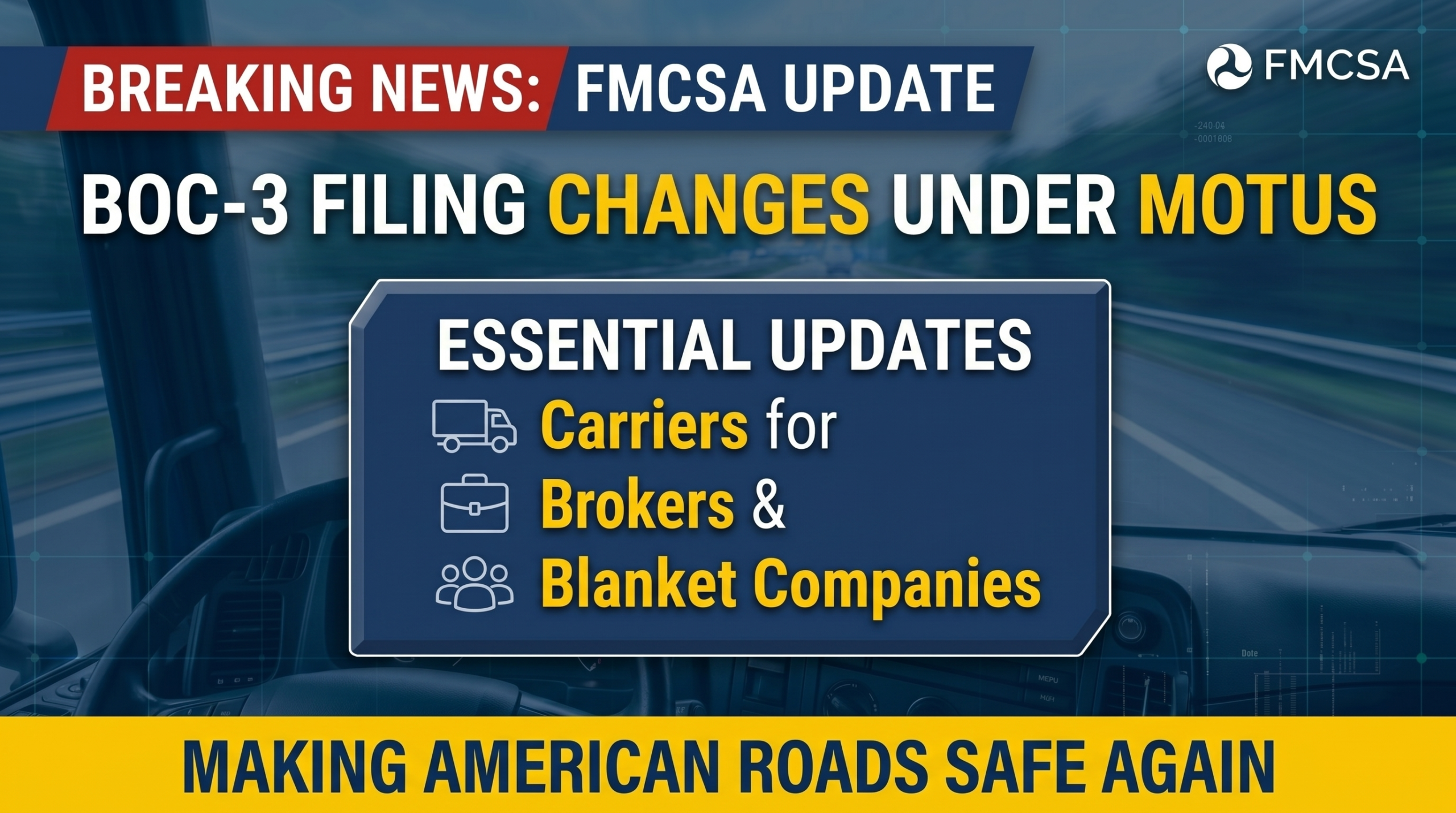
The launch of FMCSA’s new Motus registration system is transforming how registration-related services are managed across the trucking industry. While many motor carriers are focused on USDOT registrations and identity verification requirements, another major change affects BOC-3 filers and process agent management.
For years, BOC-3 filings have been handled through legacy FMCSA systems. Under Motus, blanket companies, process agent providers, and supporting companies must now follow a more structured registration and verification process.
If your company files BOC-3 forms, acts as a blanket company, or helps carriers obtain operating authority, understanding these changes is critical for maintaining compliance and avoiding filing delays.
What Is a BOC-3 Filing?
A BOC-3 (Designation of Process Agents) is a mandatory FMCSA filing required before a motor carrier, broker, or freight forwarder can receive operating authority.
The filing designates legal representatives, known as process agents, in states where the company operates. These agents can receive legal documents and court notices on behalf of the carrier or broker.
Without an active BOC-3 filing:
- Operating authority cannot become active
- FMCSA registration remains incomplete
- Carriers may experience delays in beginning operations
Because of its importance, FMCSA included BOC-3 management as part of the Motus modernization initiative.
Why FMCSA Is Changing the BOC-3 Process
FMCSA developed Motus to modernize registration management, improve security, and reduce fraudulent activity throughout the registration ecosystem.
Historically, BOC-3 filings relied on older Licensing & Insurance (L&I) systems that offered limited verification controls.
Under Motus, FMCSA is introducing:
- Stronger identity verification
- Centralized account management
- Enhanced filer oversight
- Improved documentation requirements
- Better linkage between filer accounts and registration records
These changes are intended to create greater transparency and reduce fraudulent filings.
How BOC-3 Filers Register Under Motus
One of the biggest changes affects blanket companies that submit BOC-3 filings on behalf of carriers.
Motus now requires blanket companies to complete a dedicated registration workflow before gaining filing privileges.
The registration process includes:
Step 1: Login.gov Authentication
Every filer must create or connect a Login.gov account before accessing Motus.
Step 2: Identity Verification
The primary account holder must complete FMCSA identity verification requirements.
Step 3: Business Information Submission
Applicants must provide:
- Legal business name
- Physical business address
- Contact information
- Supporting documentation
Step 4: Supporting Evidence Upload
FMCSA requires documentation proving eligibility to operate as a blanket company.
Examples may include:
- Articles of incorporation
- Articles of organization
- Business registration records
Failure to provide adequate documentation may delay application approval.
Schedule an Appointment Today
Book your 30-minute compliance consultation with our DOT experts.
Existing BOC-3 Filers Must Claim Their Accounts
Companies already filing BOC-3 forms through FMCSA’s Licensing & Insurance (L&I) system are not automatically migrated.
Instead, existing filers must claim their filer accounts within Motus.
The process requires:
- FMCSA Portal account access
- Main account holder authorization
- Verification code confirmation
- L&I filer account number validation
Once verified, existing filings become linked to the new Motus account.
This is one of the most significant operational changes introduced by the Motus platform.
New Process Agent Requirements in Motus
Motus also changes how blanket companies manage process agents.
Under the new system, blanket companies must designate process agents for:
- All 48 contiguous states
- District of Columbia
Alaska and Hawaii remain optional unless customers operate in those states.
Each process agent record now requires:
- Name
- Physical address
- Contact information
- Address validation
- Supporting documentation when required
This creates significantly more accountability than previous workflows.
USPS Address Validation Is Now Required
One of the lesser-known changes under Motus is USPS address validation.
When entering process agent information, Motus verifies addresses against USPS databases.
If an address cannot be validated:
- Additional evidence may be required
- FMCSA review may be triggered
- Approval timelines may increase
This feature is designed to improve data accuracy and eliminate invalid agent records.
Managing Process Agents After Approval
Once a blanket company becomes active in Motus, account holders can manage process agents directly within the platform.
Available functions include:
- Add new process agents
- Edit existing records
- Remove outdated agents
- Add Alaska agents
- Add Hawaii agents
However, companies cannot modify process agents until FMCSA activates the blanket company account.
What Happens If Your Application Is Returned?
FMCSA may return an application if it identifies:
- Missing documentation
- Incorrect filer information
- Verification issues
- Address discrepancies
- Process agent deficiencies
When this happens:
- FMCSA sends a notification.
- The application status changes to “Returned.”
- Corrections must be submitted.
- The application returns to “Pending” status for review.
Companies generally have 30 days to resolve deficiencies before applications are closed.
Compliance Risks for Carriers
While blanket companies handle BOC-3 filings, carriers should understand how Motus changes may affect them.
Potential risks include:
Delayed Operating Authority
If a blanket company experiences registration delays, carriers may wait longer for authority activation.
Filing Errors
Incorrect process agent information could result in rejected filings.
Compliance Gaps
Failure to maintain valid process agent coverage may create compliance concerns.
Migration Issues
Legacy filer accounts must be properly linked to Motus to prevent filing interruptions.
Best Practices for BOC-3 Filers During the Motus Transition
To minimize disruption:
Verify Existing FMCSA Portal Access
Ensure all filer accounts remain accessible.
Gather Supporting Documentation Early
Have incorporation records and registration documents ready.
Review Process Agent Information
Verify all agent records are accurate and current.
Complete Identity Verification Promptly
Verification delays may impact approval timelines.
Monitor Application Status Frequently
Respond quickly to any FMCSA requests for corrections.
How SafeRoad Compliance Helps With BOC-3 and Motus Compliance
The Motus rollout introduces new requirements, verification steps, and documentation standards that many carriers and filing companies are navigating for the first time.
SafeRoad Compliance assists with:
- BOC-3 Filing Services
- FMCSA Registration Assistance
- Operating Authority Applications
- FMCSA Portal Setup
- Motus Transition Support
- USDOT Registration Services
- Compliance Consulting
Our team stays current with FMCSA registration changes so carriers can focus on growing their business while remaining compliant.
Key Takeaways
- Motus introduces a new registration workflow for BOC-3 blanket companies.
- Existing L&I filer accounts must be claimed and linked to Motus.
- Process agents must be designated across all 48 contiguous states and Washington D.C.
- USPS address validation is now part of the process agent workflow.
- Supporting documentation is required for blanket company registration.
- FMCSA may return applications that contain errors or missing information.
- Early preparation can prevent delays in operating authority activation.
Need Help With BOC-3 Filings or the FMCSA Motus Transition?
SafeRoad Compliance helps motor carriers, brokers, freight forwarders, and filing companies navigate FMCSA registration requirements with confidence.
Whether you need a new BOC-3 filing, operating authority assistance, or support transitioning to Motus, our compliance specialists are ready to help.
Contact SafeRoad Compliance today and ensure your FMCSA filings stay accurate, compliant, and interruption-free.
Schedule an Appointment Today
Book your 30-minute compliance consultation with our DOT experts.
Frequently Asked Questions (FAQs)
A BOC-3 (Designation of Process Agents) is a mandatory FMCSA filing that designates legal representatives who can receive legal documents on behalf of a motor carrier, broker, or freight forwarder. Your operating authority cannot become active without an approved BOC-3 filing.
Motus introduces enhanced identity verification, account management, documentation requirements, and process agent validation to improve security and reduce fraudulent filings.
Yes. Existing blanket companies and filers must claim their Licensing & Insurance (L&I) filer accounts in Motus and link their existing filings to continue managing them through the new system.
A valid BOC-3 filing must include process agents in all 48 contiguous states and the District of Columbia. Alaska and Hawaii are optional unless your customers operate in those states.
FMCSA will provide the reason for the return and request corrections. After updating the application, you must resubmit it within the specified timeframe to avoid closure of the application.
No. BOC-3 forms must be submitted by an authorized Blanket Company that has been approved and registered with FMCSA.
SafeRoad Compliance assists with BOC-3 filings, FMCSA registration, operating authority applications, Motus account setup, compliance consulting, and resolving registration issues to help carriers remain compliant and operational.